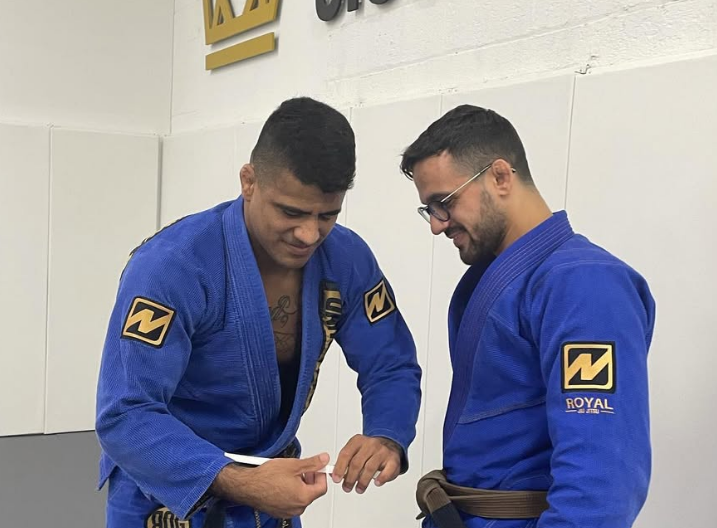
Brazilian Jiu Jitsu is one of the most practical ways to build real confidence, because you can feel progress week by week.
Starting Brazilian Jiu Jitsu in Queens, NY is exciting, and also a little intimidating if you have never done a grappling sport before. We get it. Most people are not worried about learning fancy moves on day one, you are usually wondering whether you will feel out of place, whether you need to be athletic, and what a normal first class actually looks like.
Our job is to make the start simple and safe. We train adults with different backgrounds, fitness levels, and professional lifestyles, and we coach in a way that lets you learn technique first, then add intensity over time. In Queens, that matters, because you are fitting training into a real schedule, not building your life around a gym.
This guide covers what you should know before your first month, what to bring, how classes are structured, and how we help you build skills in a way that feels steady instead of overwhelming.
Why Brazilian Jiu Jitsu works especially well in Queens
Queens is dense, busy, and full of neighborhoods where everyone seems to be juggling something. That is one reason Brazilian Jiu Jitsu fits so well here: it gives you a structured practice that delivers multiple benefits at once. You are not just getting a workout. You are learning a skill.
For many students, the biggest win is that training has a purpose. You show up, you practice a position, you troubleshoot it with a partner, and you leave with one or two things you can remember. That sounds small, but it adds up quickly, and it is a big part of why people stick with Brazilian Jiu Jitsu long term.
Because we are based in Kew Gardens, you can train in a central, accessible part of Queens instead of turning your weeknight commute into a second job. If you are coming from nearby neighborhoods, the convenience is not a minor detail, it is the difference between training consistently and training once in a while.
What makes Brazilian Jiu Jitsu different from other workouts
A lot of fitness programs are about pushing hard until you are tired. Brazilian Jiu Jitsu can be tough, but it is not random effort. It is skill-building. You are learning leverage, timing, balance, and how to stay calm when things feel messy.
Another key difference is that you have feedback built in. When you drill a technique, you know if it works because your partner’s reaction tells you. When you spar in a controlled way, you learn what holds up under pressure and what needs more reps.
Over time, this kind of training tends to create functional fitness. You build grip strength, hip mobility, coordination, and endurance, but you also learn how to manage energy and breathe. For busy adults, that combination of physical and mental training is a big reason Brazilian Jiu Jitsu is now widely seen as both a combat sport and a wellness practice.
Do you need experience to start BJJ in Queens
No. You do not need prior martial arts experience to start. In fact, beginners are a normal part of our daily training environment, and we plan classes with that in mind.
We also understand that the word “sparring” can be a little loud in your head when you are new. Our onboarding focuses on safety, basic movement, and learning how to be a good training partner. That way you can join group training without feeling like you are stepping into the deep end on day one.
If you are looking for Brazilian Jiu Jitsu in Queens and your main goal is to start safely, we structure the early phase to give you clear, repeatable fundamentals first. You will learn positions and escapes you can actually remember, not a long list of moves that vanish the moment class ends.
What to expect in your first class
Your first class should feel organized, welcoming, and surprisingly doable. Most people are nervous for the first five minutes, then they start moving and realize it is not about being tough, it is about being coachable.
A typical first class includes a warm-up that is more movement-based than “run until you drop.” Think hip escapes, rolls, and position-focused drills that teach your body how to move on the mat. Then we teach a technique in steps, and you practice it with a partner at a controlled pace. Depending on the class format, there may be light positional sparring, or you may focus on drilling and learning class etiquette first.
You will also learn the unspoken rules that make training feel smooth:
- Tapping is normal and respected, and it is how we train safely
- You can always ask your partner to go lighter
- We focus on control before speed
- Everyone was new once, including the people who look very comfortable now
Your first month: a realistic timeline for beginners
The first month of Brazilian Jiu Jitsu is mostly about building comfort. You are learning vocabulary with your body: how to frame, shrimp, bridge, posture, and protect your neck. It is normal to feel like you are thinking a half-second behind. That is not failure, that is learning.
Here is what we typically want you to focus on early:
1. Week 1: learn basic mat movement, tapping, and a couple of core positions like guard and side control
2. Week 2: start connecting escapes to positions so you are not stuck when pressure increases
3. Week 3: add one or two simple submissions and learn the control points that make them safe
4. Week 4: begin repeating the same scenarios with more confidence and less panic breathing
If you are consistent, you will notice changes fast. Not perfect technique, but better balance, better reactions, and a calmer mindset under pressure. Those are real wins, especially for anyone who wants self-defense skills that do not rely on size or strength alone.
How often should a beginner train
We like to keep this practical, because Queens schedules are real. For most beginners, training 2 to 3 times per week is the sweet spot. It is frequent enough to retain what you learned last class, but not so intense that you feel constantly sore or rushed.
If you can only do once a week at first, that is still worth doing, especially if you take notes after class or mentally review the main technique. If you can train 4 times per week, great, but we will still encourage you to pace yourself and focus on quality reps instead of collecting exhaustion.
The best schedule is the one you can maintain for months, not just two motivated weeks.
What to wear and what to bring to class
We try to make the first day easy. You do not need a closet full of gear to start Brazilian Jiu Jitsu. What you bring depends on whether the class is gi or no-gi, and the schedule page will clarify what is on the mat that day.
For a simple beginner checklist, plan on:
- A water bottle, because you will sweat more than you expect
- A small towel and basic toiletries for after class if you are heading back to work or the subway
- Athletic wear that fits close to the body for no-gi days, like a rash guard and shorts without pockets
- For gi days, a gi if you have one, and if not, ask us what we recommend for your first week
- Flip-flops or slides for walking off the mat, which is a small habit that helps keep the space clean
A quick note that saves beginners trouble: remove jewelry, trim your nails, and do not overthink the rest. If you show up clean, on time, and ready to learn, you are doing it right.
Self-defense, fitness, and mental reset in one practice
A lot of people start BJJ in Queens because they want self-defense. That is a valid goal, and Brazilian Jiu Jitsu has a strong reputation for teaching control and escapes in realistic positions, especially in close range where many altercations end up.
At the same time, students often stay for different reasons than they expected. The fitness becomes obvious, but so does the stress relief. Training forces you to focus on one task at a time. You cannot answer emails while you are trying to maintain posture in someone’s guard. That break from mental noise is a big deal for busy professionals.
We also see how community matters. Queens is diverse and social, but it can still feel isolating when your week is commute, work, errands, repeat. Training creates a steady routine where you recognize faces, build trust with partners, and improve together. It is not loud or forced, it is just consistent.
Training safely: how we keep progress steady
Safety is not a slogan, it is how you structure learning. We coach control, we match training partners thoughtfully, and we emphasize tapping early and often. If you have injuries, past surgeries, or limitations, tell us so we can help you modify and keep training productive.
A few principles we use to help beginners avoid common mistakes:
- Technique first, strength second, because strength without structure usually leads to sloppy positions
- Positional sparring before full rounds when you are still learning how to move
- Clear rules about intensity, so training stays challenging but respectful
- Encouraging questions, because confusion is normal and small clarifications prevent bad habits
Brazilian Jiu Jitsu is a long-term practice. When you treat it that way, your body adapts, your timing improves, and your confidence becomes something you can rely on, not something you have to hype up.
Kids and adults: how training fits different ages
We support both children and adults, and the benefits look a little different depending on age. For adults, training is often about self-defense, fitness, and stress management. For kids, it is commonly about confidence, coordination, and learning how to handle challenges without melting down or quitting.
If you are a parent in Queens, the practical bonus is scheduling. When a household has work, school, and everything else, having structured programs that welcome different ages can make training feel doable as a routine, not a special event you squeeze in once a month.
If you are not sure where you or your child should start, we will point you toward the right class so the first experience feels positive and appropriately paced.
Ready to Begin
If you want a clear, beginner-friendly way to start Brazilian Jiu Jitsu in Queens, our approach is built around technical coaching, safe progressions, and a community that welcomes all levels. You do not have to be “in shape” first, and you do not have to know what you are doing before you walk in, we will teach you how to train.
At Royal Jiu-Jitsu Queens, we train in Kew Gardens with classes designed for adults with demanding schedules and families looking for a positive, structured martial arts environment. When you are ready, we will help you take the first step and keep it sustainable.
Continue your martial arts journey beyond this article by joining a class at Royal Jiu-Jitsu Queens.