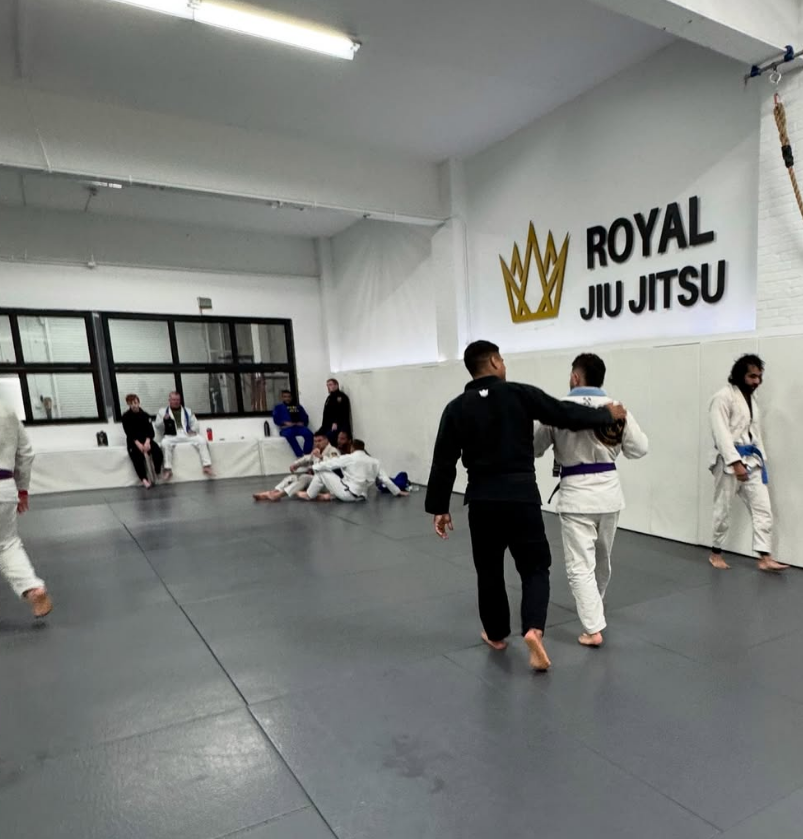
One focused hour on the mat can turn a loud day into a quiet mind, and you feel the shift almost immediately.
Queens moves fast, and your nervous system tends to match the pace. Between commutes, deadlines, family logistics, and the constant background noise of screens, stress stops being an occasional thing and starts feeling like your default setting. We see adults walk into class carrying that weight in their shoulders, their breathing, even the way their attention skips around.
Brazilian Jiu Jitsu gives you a different kind of off switch. Not the passive kind where you scroll until you feel tired, but the earned kind: physical exertion, problem solving, and real present moment focus. If you are looking for Brazilian Jiu Jitsu in Queens because you want relief you can feel the same day, our classes are built to do exactly that, safely and progressively.
In this article, we will explain how stress relief actually happens in training, why it can feel so fast, and what you can expect as a beginner with a busy schedule. We will also cover how our program structure supports adults who want results without getting overwhelmed.
Why stress feels different after Brazilian Jiu Jitsu
Stress relief is not only about burning calories. Your brain and body want signals of safety, competence, and control. Brazilian Jiu Jitsu delivers those signals in a surprisingly practical way because you are moving, breathing, and solving problems in real time with a partner.
The endorphin and mood lift is real, and it shows up quickly
Rolling and controlled sparring create intense physical effort in short bursts. That kind of exertion encourages endorphin release, which helps shift mood and reduce tension. Many students tell us the same thing after class: their head feels clearer, and the tightness they carried in their neck or jaw finally lets go.
It is also not just endorphins. For many adults, training improves the balance of feel-good brain chemicals like serotonin and dopamine over time, especially when you train consistently. The short version is simple: you work hard, you feel better, and your body starts associating the mat with relief.
It forces your attention into the present moment
A big driver of stress is mental time travel, replaying what happened or rehearsing what might go wrong. In Brazilian Jiu Jitsu, you cannot do that for long. You need to notice pressure, grips, angles, breathing, timing. Your brain narrows down to what matters right now, which is why many people describe it as a moving meditation.
That focused state is often called flow. You are fully engaged, not numb, not distracted. And when class ends, your mind tends to stay quieter for a while because it has had a break from multitasking.
You practice calm under pressure without the real-world consequences
Life pressure can feel vague and endless. Mat pressure is specific and temporary. When you are stuck in a position, you have a job to do: breathe, frame, move, escape, or tap. You learn what “too much” feels like, and you learn to respond instead of panic.
That is stress inoculation, in a safe environment. Over time, your nervous system learns that pressure does not automatically equal danger. That carries over into work conversations, crowded commutes, and tense family moments, where staying composed is basically a superpower.
Why BJJ in Queens fits modern adult stress, specifically
Queens has its own flavor of stress. The day is packed, the pace is fast, and personal space can feel rare. When you are managing that environment, you do not always need more stimulation. You need a structured reset.
BJJ in Queens works because it gives you a clear container: you show up, you follow the plan, you get coached, you train, you leave. No endless decision-making. No phone in your face. Just a defined hour where your body works and your brain quiets down.
We also notice that Queens adults often want efficiency. If you can get strength work, cardio, coordination, and mental decompression in one session, that matters. Brazilian Jiu Jitsu does that because it is full-body effort plus problem solving, not a single-lane workout.
What “fast stress relief” looks like in one class
Relief can be immediate, but it helps to know what that actually means. You might not float out of the building like a zen monk. More often, you feel grounded. Your muscles are tired in a good way. Your thoughts slow down. You stop carrying the day in your chest.
A typical class is designed to get you there without throwing you into chaos. Most adults experience the shift in three phases:
1. Arrival and warm-up: your breathing starts to deepen, and the outside world fades a bit
2. Technique and drilling: your attention locks in, because details matter
3. Live training: your brain goes fully present, and the “noise” drops out
That is why the post-class feeling is so distinct. You earned it.
How our adult program is structured to reduce stress, not add it
If you are already stressed, the last thing you want is a confusing environment where you feel behind. Our job is to make the learning process clear, safe, and repeatable so training becomes the part of your week that restores you.
You get progressive coaching, not random intensity
We build fundamentals step by step. You will learn how to move safely, how to protect your joints, how to manage distance, and how to breathe when pressure rises. That breathing part matters more than most beginners expect, because breath control is one of the fastest ways to downshift your stress response.
You can train hard without feeling reckless
Brazilian Jiu Jitsu can be intense, but intensity does not have to mean unsafe. We emphasize control and communication. Tapping is normal and respected. Resetting and asking questions is normal. Nobody is expected to “win” practice.
That culture is a big reason stressed adults stick with BJJ. You get the challenge without the emotional cost of proving yourself every minute.
You get community without forced small talk
Stress gets worse when you feel isolated. The mat creates connection in a practical way: partners help partners improve. Over time, you recognize faces, you learn names, you share progress. It is not performative networking. It is just people training together consistently, which feels refreshingly human.
The hidden stress skills you build (that show up outside the gym)
People often start Brazilian Jiu Jitsu for fitness or self-defense, then realize the bigger change is mental. You start responding differently to everyday pressure because you practice those responses every week.
Here are a few skills adults often notice first:
• Boundary setting through tapping and resetting, which reinforces that stopping is allowed and smart
• Emotional regulation when positions go wrong, because you practice recovering without spiraling
• Problem solving under fatigue, which strengthens mental flexibility instead of rigid thinking
• Confidence from competence, because you can track real improvements over time
• Better body awareness, which helps you catch stress signals earlier, before burnout hits
None of that requires you to be aggressive. It requires you to be attentive, consistent, and willing to learn.
Common beginner worries, answered plainly
Stress relief only works if you actually show up. These are the concerns we hear most from adults who want to try Brazilian Jiu Jitsu in Queens, but feel unsure.
“Am I too out of shape to start?”
No. You do not need to “get in shape first.” Training is how you get in shape. We scale intensity, and we coach you to work at a pace that is challenging but sustainable. Your first win is showing up, not being perfect.
“I have anxiety. Will sparring make it worse?”
For many people, the opposite happens. The first few sessions can feel unfamiliar, but you quickly learn that you are in control. You can tap at any time. You can pause. You can choose appropriate partners. Over time, your brain learns that pressure can be managed, and that lesson is calming.
“I am busy. How often should I train for stress relief?”
Two to three times per week is a great target for noticeable change, but even once per week can help. The key is consistency. Think of it like a reset appointment with yourself that you protect on the calendar.
“Do I need gear or experience?”
You do not need experience. For gear, start with comfortable athletic clothing if you are trying a class and follow the guidance we provide about what is best for safety. We will help you understand what you need and when you need it.
Getting the most stress relief from your first month
The first month is where your body and mind start to understand the rhythm of training. You will feel sore sometimes, and that is normal, but you should also feel better in the ways that matter: sleep, mood, patience, focus.
If your main goal is stress relief, these habits make a noticeable difference:
1. Show up early enough to settle your breathing before class starts
2. Pick one small goal per week, like “breathe during bad positions”
3. Ask questions after drilling, because clarity reduces stress
4. Train with control, even when you feel competitive
5. Leave your phone alone for the hour, because that is part of the reset
This is also where many adults notice a new kind of confidence. Not loud confidence. Quiet confidence, the kind that comes from doing hard things on purpose.
How Brazilian Jiu Jitsu supports long-term burnout prevention
Fast relief is great, but long-term stress management is the bigger win. Burnout often comes from feeling trapped in routines you cannot control. Training gives you a place where effort leads to progress, and progress is visible.
Brazilian Jiu Jitsu is also cognitively engaging. You are constantly solving puzzles: grips, angles, timing, transitions. That problem solving stimulates the brain in a way that is different from work stress. Work stress often feels like endless open tabs. BJJ feels like one meaningful task at a time.
Over months, you build resilience through repetition. You learn to recover, to reset, to breathe, to keep going. Those are not just sports skills. Those are life skills.
Ready to Begin
If you want a practical way to feel better fast, Brazilian Jiu Jitsu gives you a direct path: move hard, focus fully, practice calm under pressure, and walk out lighter than you walked in. That is the pattern, and it works because it is rooted in how your nervous system responds to training.
We built our adult program at Royal Jiu-Jitsu Queens to be a reliable reset for Queens schedules, with coaching that meets you where you are and a class environment that keeps stress going down, not up.
Challenge your body and sharpen your mindset with martial arts training at Royal Jiu-Jitsu Queens.