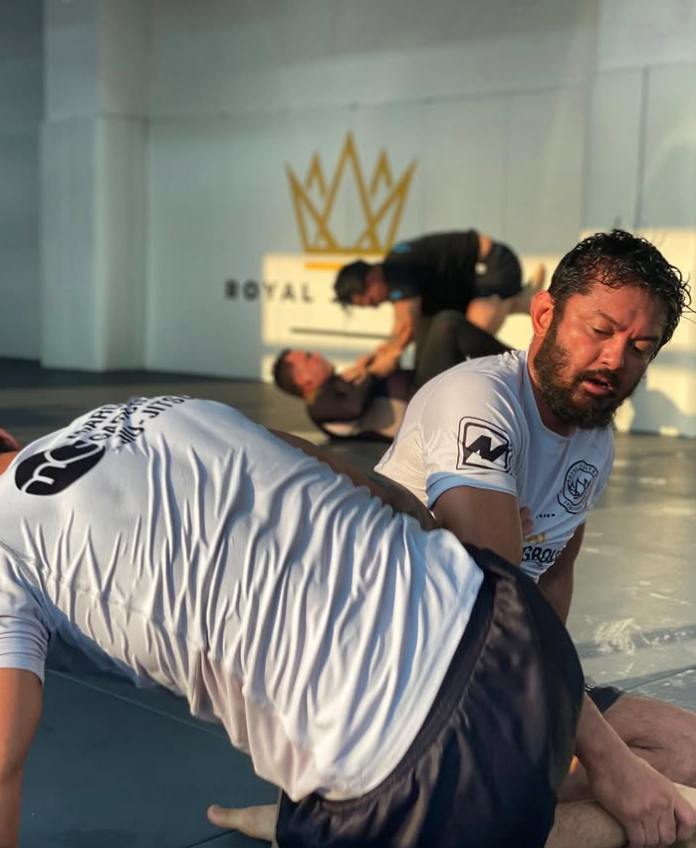
Brazilian Jiu Jitsu is more than a workout - it is a weekly practice of calm, confidence, and capability you can carry anywhere.
Living in Queens moves fast, and most of us do not have hours to spare for complicated routines. That is one reason Brazilian Jiu Jitsu works so well here: you can show up, train with purpose, and leave feeling sharper than when you walked in. We see it every day in our classes - people come in looking for fitness or self-defense and start noticing changes in how they handle regular life.
Brazilian Jiu Jitsu is practical by design. It teaches you how to use leverage, positioning, and timing instead of relying on size or brute strength. In a borough where you might be commuting, juggling family schedules, and squeezing in personal time where you can, that kind of efficiency matters.
If you are curious but hesitant, you are not alone. A lot of first-timers worry about being “behind,” not being athletic enough, or not knowing what to do. Our job is to make your starting point feel normal, because it is.
Why Brazilian Jiu Jitsu fits Queens life so well
Queens is dense, diverse, and busy in the best way. That also means your free time is precious. Our programs are built around the reality that you might be coming from work, class, or a long day of errands. The goal is not to turn your week upside down. The goal is to give you a training rhythm you can actually keep.
Brazilian Jiu Jitsu in Queens tends to attract adults who want something more engaging than a standard gym routine and families who want an activity that builds discipline without being overly rigid. BJJ in Queens also appeals to people who want skills that translate to the real world, not just a sport that stays on the mat.
What makes the training “fit” is consistency. When you train a couple times a week, you start building patterns: how to breathe under pressure, how to stay balanced, how to problem-solve when a plan is not working. Those patterns show up later when you are dealing with everyday stress.
Confidence you can feel, not just think about
Confidence is an overused word online, but Brazilian Jiu Jitsu earns it in a very specific way. You learn a technique, you drill it, you pressure-test it in controlled sparring, and you slowly realize you can handle more than you thought. It is not instant. It is not magic. It is repetition and progress you can measure.
We focus on progressive skill-building, which means you are not thrown into chaos without guidance. You learn posture, frames, escapes, and basic control positions that make you safer and more effective. Over time, that changes how you carry yourself. Your posture improves. Your voice gets steadier. You stop second-guessing every little decision.
A subtle part of confidence is boundaries. When you train Brazilian Jiu Jitsu, you get comfortable saying “stop,” resetting, and communicating clearly with training partners. That kind of practice can carry into work conversations, family dynamics, and daily interactions where you need to be direct without escalating.
Practical self-defense, trained the right way
Self-defense is one of the most common reasons people look for Brazilian Jiu Jitsu. The reason it works is simple: many real altercations end up close-range, tangled, and off-balance. BJJ teaches you how to survive and improve your position in exactly that kind of mess, using structure instead of panic.
We emphasize control, awareness, and decision-making. Self-defense is not about looking tough. It is about staying safer and creating options. That can mean learning how to stand back up, how to escape from bottom positions, and how to manage distance. It can also mean learning when not to engage at all.
Because training is live and interactive, you learn what resistance feels like. That matters. It is one thing to memorize a move. It is another thing to apply it with someone moving, pushing, and trying to stop you. With the right coaching, that pressure becomes a teacher, not a threat.
Stress relief and mental resilience you can build weekly
Queens life can be loud. Even when you love it here, it can still be a lot. Brazilian Jiu Jitsu gives you a place where your focus narrows down to the next breath, the next grip, the next decision. That mental shift is a big reason students tell us they sleep better and feel less “stuck in their head” after training.
BJJ is also a problem-solving practice. Every round asks a question: can you escape, can you improve position, can you stay calm long enough to find an opening? You start learning to treat pressure as information. That mindset helps outside the gym when your day is packed and something goes sideways.
We also keep training structured, because good stress is different from chaotic stress. You should feel challenged, not overwhelmed. The goal is to leave tired in a satisfying way, like you used your energy for something real.
Fitness that feels useful (and stays interesting)
If you have tried to “get in shape” through willpower alone, you already know how boring that can get. Brazilian Jiu Jitsu changes the game because fitness is a side effect of learning skills. Your conditioning improves because you are moving with intention: bridging, shrimping, posting, standing, framing, and controlling.
We see students gain stronger hips and legs, better core stability, and more durable shoulders when training is done with solid technique and appropriate intensity. Flexibility and mobility often improve too, partly because grappling asks your body to move through angles you do not hit in everyday life.
One underrated benefit: you start paying attention to recovery. Hydration, sleep, and warm-ups suddenly matter because you can feel the difference on the mat. That is a quiet lifestyle upgrade that tends to stick.
Gi vs No-Gi: choosing the training style that fits your goals
Brazilian Jiu Jitsu can be trained in a Gi (a traditional uniform) or No-Gi (typically rashguard and shorts). We offer both because each format teaches you something valuable, and variety keeps training fresh.
What Gi training tends to emphasize
The Gi adds grips and friction, so you learn how to break grips, manage collars and sleeves, and control posture with more “handles” available. Many beginners like Gi because it slows things down a bit, which can make learning positions feel clearer.
What No-Gi training tends to emphasize
No-Gi is faster and slipperier. It often rewards movement, underhooks, head position, and tight control without relying on cloth grips. If your goal is athletic conditioning or a more scramble-heavy style, No-Gi can feel like a great fit.
You do not have to pick perfectly on day one. We help you understand how each class works, what to wear, and what to expect so you can settle in without overthinking it.
What to expect in your first class in Queens
Walking into a new martial arts gym can feel intimidating, even if you are excited. We keep the on-ramp simple, and we coach you through the awkward parts that nobody talks about, like where to stand, how to partner up, and what “drilling” actually means.
A typical first class usually includes a warm-up, technique instruction, partner drills, and optional controlled sparring depending on the class format and your comfort level. You will not be expected to “win.” You will be expected to learn.
Here is a practical checklist that helps most beginners feel prepared:
• Arrive a little early so you can meet us, get oriented, and breathe before class starts
• Wear comfortable training clothes, and bring water so you can stay steady through the session
• Expect to tap early and often at first - tapping is how you train safely and learn faster
• Focus on one or two details per technique instead of trying to remember everything
• Ask questions when something feels confusing, because confusion is normal at the start
We care about safety and control. Your first day should feel challenging, but it should also feel welcoming and well-instructed.
Kids and family training: structure without the pressure
Parents in Queens often want an activity that helps kids burn energy, build confidence, and learn discipline in a healthy way. Brazilian Jiu Jitsu does that while also teaching respect, focus, and body awareness.
Our kids program is designed to be age-appropriate and structured. We teach fundamentals through repetition, games, and simple goals that keep kids engaged. When kids learn how to fall safely, move their bodies, and stay composed in a tough moment, that can show up in school, sports, and social situations.
Family training also creates a shared language around effort and resilience. When your child sees you practice something that is hard, keep showing up, and improve over time, that example lands. And honestly, it is pretty rewarding to share a routine that feels positive and productive.
Women-focused self-defense and why BJJ is a strong foundation
Women’s self-defense deserves its own conversation, because the goals are often specific: creating space, escaping grabs, getting back to your feet, and making clear decisions under stress. Brazilian Jiu Jitsu is a strong base for those goals because it prioritizes leverage, positioning, and practical control.
Structured programs like Gracie University’s Women Empowered have helped make this approach more accessible by organizing BJJ-based self-defense into a clear curriculum. We align with the same principle: you should not have to guess what to learn first. You should be guided through scenarios and solutions progressively, with training partners who respect the purpose of the work.
We also keep the environment supportive. You should be able to train seriously without feeling like you have to prove anything. Good self-defense training builds capability and calm at the same time.
How often should you train to feel real progress?
Consistency beats intensity, especially in the beginning. Most adults do well starting with two classes per week. That is enough to learn fundamentals, build conditioning, and recover without feeling like training is taking over your schedule.
If you are feeling good, three times per week tends to be a sweet spot for faster progress. You will notice timing improves, you recognize positions sooner, and sparring becomes less frantic. More than that can work too, but only if sleep and recovery stay solid.
We also encourage you to use the class schedule intentionally. Pick days you can keep even when work gets busy. A plan you can maintain is better than a perfect plan you quit.
Building community in a borough that can feel busy
Queens is full of people, but it can still feel isolating if you are stuck in the commute-work-repeat loop. Brazilian Jiu Jitsu creates a real community because you train with partners, learn together, and help each other improve. You are not just sharing space, you are sharing effort.
We keep the culture respectful and beginner-friendly. You will train with people at different levels, and you will learn quickly that everyone remembers what it felt like to be new. That shared understanding makes it easier to relax, ask questions, and keep showing up.
BJJ in Queens works best when you treat it as a long-term practice. Some weeks you will feel amazing, some weeks you will feel clumsy, and that is normal. Progress still happens, often quietly, until one day you realize you are moving with more control in every part of life.
Take the Next Step
Training works best when it fits your actual life, and that is exactly how we design our programs at Royal Jiu-Jitsu Queens. Brazilian Jiu Jitsu can build practical self-defense, real fitness, and a steadier sense of confidence that shows up on a random Tuesday, not just in the gym.
If you are ready to start, we will help you choose classes that match your schedule, your comfort level, and your goals, whether you are coming in as a beginner, bringing your child, or returning to training after time away at Royal Jiu-Jitsu Queens.
Take what you learned here and apply it on the mats by joining a Brazilian Jiu-Jitsu class at Royal Jiu-Jitsu Queens.