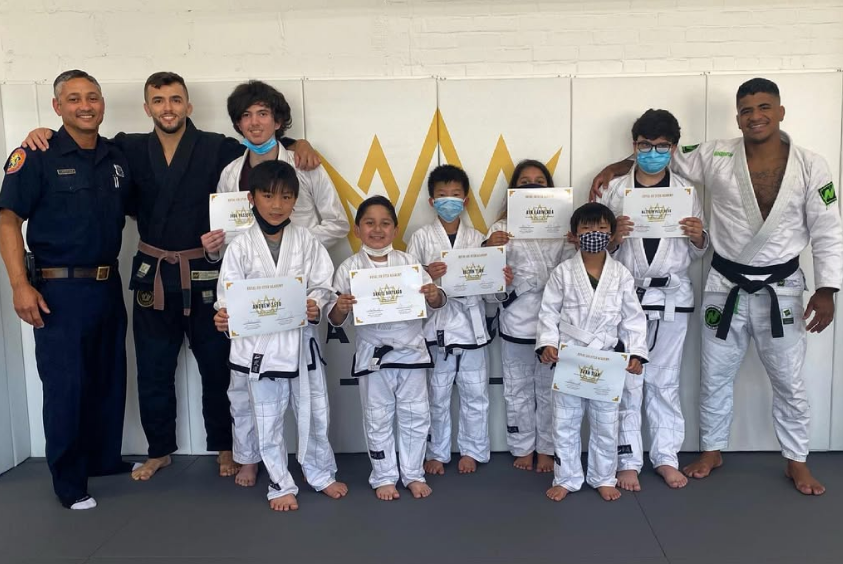
The right kind of training can help your child feel calmer, braver, and more capable at school and at home.
In Queens, kids juggle a lot: school expectations, packed schedules, screen-time distractions, and the constant hum of city life. Parents often tell us they are not only looking for an activity, but also for something that builds steady confidence and sharper focus. Youth brazilian jiu jitsu does that in a way that feels practical and surprisingly “real” for kids.
Our youth program uses structured classes, clear expectations, and step-by-step skill building to help your child grow from the inside out. The techniques matter, of course, but what parents usually notice first is posture, eye contact, and a calmer response to everyday challenges.
And the best part is that these changes are not vague or mysterious. With consistent Youth brazilian jiu jitsu training, we can point to specific habits that build confidence and focus over time, one class at a time.
Why Youth Brazilian Jiu Jitsu works differently for confidence and focus
Youth brazilian jiu jitsu is a problem-solving martial art. Instead of relying on size or strength, kids learn timing, leverage, and how to stay composed when something feels hard. That combination is powerful for confidence because it teaches your child: “I can figure this out.”
It is also powerful for focus because it rewards attention to detail. If your child looks away during a drill, the technique stops working. The body gives immediate feedback, so the mind learns to stay present. Over time, that “pay attention, then adjust” loop becomes a habit, not just a class rule.
Parents regularly report big improvements in confidence and concentration from youth BJJ training. In one set of parent-reported outcomes, 96.4% agreed that BJJ improves confidence, 78.6% noticed better concentration, and 92.9% observed improved mental flexibility in youth participants. Those numbers line up with what we see on the mats: kids who keep showing up tend to stand taller, speak up more, and stick with tasks longer.
Confidence is built through small wins, not hype
A lot of kids are used to confidence being treated like a personality trait: you have it or you do not. We approach it differently. We treat confidence as a skill that can be trained.
In Youth brazilian jiu jitsu, progress shows up in small, concrete moments. Your child learns how to fall safely. Then how to stand up with balance. Then how to escape a hold. None of those steps is glamorous, but each one is a real win. When kids collect enough real wins, confidence stops being pretend.
The belt system gives structure to self-belief
Kids respond well to clear goals. Belt progression in BJJ does not just reward athleticism, it rewards consistency, listening, effort, and improvement. That matters in Queens, where many kids feel pressure to be “perfect” quickly. Our approach teaches a better message: improvement is what counts.
As training time adds up, the mental benefits tend to deepen. Research on youth ranks shows that more experienced students often display higher mental strength, resilience, self-efficacy, self-control, and overall life satisfaction compared to beginners. In plain terms, time on the mat tends to build steadier kids.
Safe sparring teaches courage without chaos
Controlled sparring is one of the most misunderstood parts of Youth brazilian jiu jitsu. We keep it age-appropriate and supervised, with clear rules. The goal is not to “win,” it is to practice staying calm while trying something that is challenging.
That experience translates. Kids learn how to handle pressure without freezing, and how to keep trying after a mistake. A child who learns to reset after being put in a tough position often learns to reset after a tough math test too.
Focus improves because BJJ trains attention under pressure
Many activities ask kids to focus when everything is quiet. BJJ asks kids to focus while moving, balancing, and responding to a partner. That is a different level of attention, and it carries over to schoolwork in a practical way.
Youth brazilian jiu jitsu demands that your child:
• Listens to a sequence of steps and repeats it accurately
• Notices body position, grips, and spacing
• Makes quick decisions without panicking
• Adjusts when the first attempt does not work
Parents often tell us they see improvements in homework routines and classroom behavior after a few months. That makes sense. Training creates a rhythm: show up, line up, listen, drill, practice, reflect. When kids practice that rhythm several times a week, it becomes normal.
What confidence and focus look like after a few months
Most parents do not need a dramatic transformation to feel the difference. They want the small things: less quitting, fewer meltdowns, better follow-through. With consistent training, many families notice meaningful changes around the 4 to 6 month mark, especially as kids earn stripes or move closer to a new belt.
Here are a few realistic “before and after” patterns we see with Youth brazilian jiu jitsu students:
Before training
A child might hesitate to try new things, avoid eye contact, or get frustrated quickly when something feels difficult. Focus can drift, especially if the child is used to quick entertainment and constant switching between tasks.
After consistent training
Kids often become more comfortable being a beginner, which is a huge life skill. They start asking better questions, staying engaged longer, and accepting feedback without taking it personally. Confidence looks quieter and more stable, not loud.
The anti-bullying and self-defense benefit, without promoting aggression
Parents in Queens frequently ask about bullying. Youth brazilian jiu jitsu can help because it gives kids tools and posture, not just techniques. When a child feels physically capable, the emotional tone changes. Shoulders relax. Voice steadies. Eye contact improves. Those details can reduce the chance of being targeted in the first place.
If a situation does turn physical, BJJ teaches kids to control distance, escape holds, and create space to get help. That is very different from teaching kids to trade punches. It is also worth noting that research does not show an increase in aggression across BJJ ranks. In our classes, we reinforce that training is for self-control, not dominance.
Why Queens kids benefit so much from structured mat time
Queens is busy. Kids often spend long hours sitting, commuting, or looking down at screens. Youth brazilian jiu jitsu gives them a place to move with purpose. We see improvements in coordination, posture, and body awareness, especially for kids who do not get much outdoor space during the week.
There is also a social benefit that feels particularly important in a diverse borough. On the mat, kids learn respectful contact, taking turns, and partnering with classmates of different ages, backgrounds, and personalities. For many children, that becomes a genuine sense of belonging, which supports confidence in a deep way.
What your child learns in our Youth Brazilian Jiu Jitsu program
We keep our youth curriculum structured and age-specific so kids can learn safely and steadily. While each class has its own theme, the core building blocks stay consistent.
In our Youth brazilian jiu jitsu classes, your child typically works on:
- Fundamental movement skills like balance, hip movement, and safe falling
- Escapes from common positions to reduce panic and build problem-solving
- Basic control positions that teach patience and responsibility
- Simple submissions taught with safety rules and close supervision
- Games and drills that build focus, reaction time, and coordination
- Mat etiquette like listening, partnering respectfully, and following directions
These details matter because confidence grows when kids know what to do, and focus grows when the class has a clear structure.
How class structure supports discipline without feeling harsh
Discipline does not need to feel intimidating. We use routines that are predictable, which helps kids settle in quickly. When kids know what comes next, they spend less energy resisting and more energy learning.
A typical class includes a warm-up that builds coordination, technical instruction with step-by-step coaching, drilling for repetition, and a controlled live segment when appropriate. We end with a short reset so kids leave feeling accomplished, not wound up.
That “start strong, train with purpose, finish calm” pattern is one reason Youth brazilian jiu jitsu is often linked to improved mood and reduced anxiety. Parent-reported outcomes in youth BJJ include improved mood (92.8%) and reduced anxiety (87.5%), which fits what we aim for in our room: challenging, but supportive.
Family participation and the confidence ripple effect
Queens families are busy, and it helps when an activity brings everyone onto the same page. BJJ has a strong trend toward family-wide participation, with reports showing 87% of families with children engage in BJJ for bonding, fitness, and shared values like discipline.
We see the ripple effect when parents and kids share the same language around effort and progress. A child who hears “keep your base” in class might also hear “keep your base” as a reminder to stay steady during a stressful week. It sounds small, but it works because it is consistent.
Getting started: what to expect in the first few weeks
Starting something new can be a little nerve-wracking for kids, even if they are excited. We keep the early phase simple and welcoming so your child can build momentum quickly.
Here is how the first few weeks usually unfold:
1. Your child learns basic safety rules, mat etiquette, and how to move with control.
2. We introduce foundational positions and simple escapes to build immediate capability.
3. Drilling becomes more comfortable, and focus improves as routines become familiar.
4. Your child starts to connect techniques into sequences, which boosts confidence fast.
5. If appropriate, we add controlled sparring with clear coaching and boundaries.
This is also when parents often notice early wins: better listening, improved patience, and a willingness to try again after a mistake.
Take the Next Step
If you want an activity that develops real confidence and better focus, Youth brazilian jiu jitsu is one of the most practical choices you can make for your child. We build skills in a structured way, reinforce calm problem-solving, and create a training environment where effort is noticed and progress is measurable.
When you are ready, we would love to welcome your family to Royal Jiu-Jitsu Queens and help you find a class rhythm that fits school, homework, and everything else Queens life brings. Our goal is simple: give your child a place to grow stronger, steadier, and more confident, week after week.
Develop confidence, discipline, and real self-defense skills through Brazilian Jiu-Jitsu classes at Royal Jiu-Jitsu Queens.