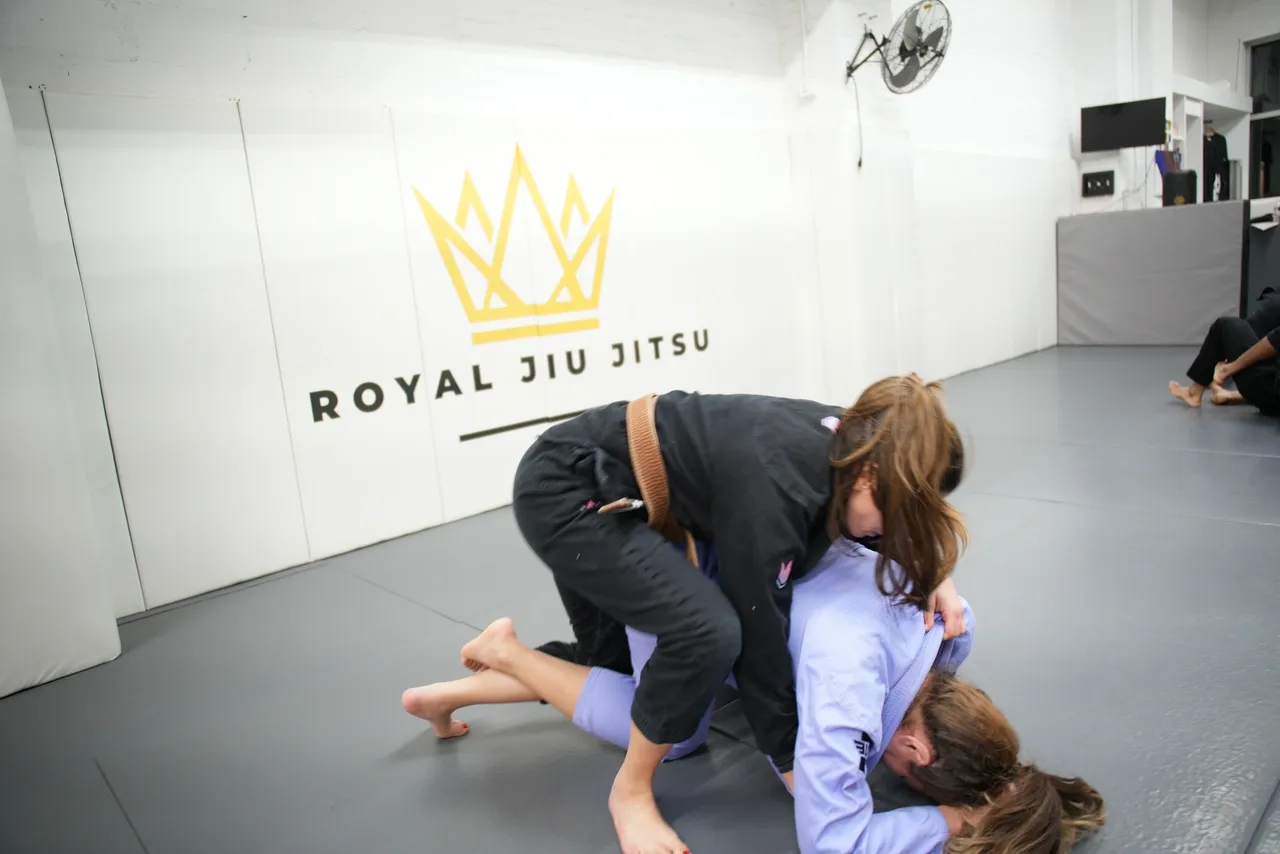
Youth Brazilian Jiu Jitsu gives Queens teens a place to build real confidence, practical self-defense, and steady discipline that shows up everywhere else.
Queens teens have a lot coming at them: school pressure, social stress, long commutes, constant screens, and the everyday reality of living in a busy city. When families ask us what makes Youth brazilian jiu jitsu different from “just another activity,” we usually start with one idea: it gives you a consistent space where effort matters more than popularity, and progress is something you can actually measure.
Brazilian Jiu Jitsu is also one of the fastest-growing martial arts in the U.S., and that’s not an accident. It’s a skill-based system that rewards patience, control, and problem-solving. You don’t have to be the biggest or strongest teen in the room to do well. You just have to show up, listen, and practice.
In our Queens youth program, we see teens grow in ways that surprise even us sometimes: a quieter student starts speaking up, a high-energy student learns how to focus, and a teen who’s been dealing with bullying finally carries themself differently in the hallway. Youth brazilian jiu jitsu does that when it’s taught with structure, safety, and a clear path forward.
Why Youth Brazilian Jiu Jitsu Works So Well for Queens Teens
A good teen program has to meet you where you are. In Queens, that means working with different school schedules, different fitness backgrounds, and a wide mix of personalities. Youth brazilian jiu jitsu is flexible enough to support all of that because training is built around skill progression, not just “who’s athletic.”
BJJ also blends physical learning with emotional control. On the mat, you’ll face resistance in a safe setting, and you’ll learn how to respond without panicking. That might sound simple, but it’s a big deal for teens. The ability to stay calm under pressure transfers directly into tests, interviews, sports tryouts, and tense social situations.
Another reason BJJ in Queens keeps growing is that it fits urban reality. We don’t train for fantasy scenarios. We focus on awareness, balance, control, and practical self-defense habits that make sense for real life, whether you’re walking home, riding the subway, or navigating crowded spaces.
Confidence That Feels Real (Not Just “Motivational”)
Confidence is one of those words people throw around, but teens can tell when it’s fake. Real confidence comes from doing hard things, failing a little, and coming back anyway. Youth brazilian jiu jitsu creates that loop almost every class, in a controlled way.
You’ll learn techniques, drill them, and then pressure-test them during positional sparring. That’s where the “I can handle this” mindset gets built. And because BJJ has so many layers, there’s always something to improve. Even on days when you’re tired or stressed, you can still leave knowing you got a little better at something.
We also coach teens to separate outcomes from identity. If you tap, you didn’t “lose as a person.” You learned. That mindset shift is huge for Queens students who feel like everything in life is graded, ranked, posted, or judged.
Anti-Bullying Skills: Awareness, Boundaries, and Control
Families often ask us if Youth brazilian jiu jitsu helps with bullying. Our answer is yes, but not in the Hollywood way. The goal is not to turn teens into fighters. The goal is to help you carry yourself with calm boundaries, and to know what to do if someone crosses a line.
We teach respectful, age-appropriate self-defense concepts: distance management, posture, grips, escapes, and how to control someone without striking. That matters in teen situations because the safest resolution is the one that de-escalates, creates space, and gets you out.
Just as important, we talk about decision-making. When do you leave? When do you get help? When do you use your voice? BJJ gives teens the physical tools, but the real safety comes from pairing those tools with situational awareness and self-control.
Fitness for Teens Who Don’t Love “Gym Culture”
Not every teen wants to lift weights or run laps, and that’s fine. Youth brazilian jiu jitsu builds fitness through movement that has purpose: pushing, pulling, bridging, standing up safely, and learning how to use your whole body as a coordinated system.
Over time, teens develop stronger cores, better mobility, improved grip strength, and more endurance. The cardio sneaks up on you, too. Rolling for short rounds teaches your body how to work hard, recover, and work hard again. It’s a kind of conditioning that tends to feel more engaging than repetitive workouts.
This is also one reason brazilian jiu jitsu in Queens is such a good fit for busy families. You’re not just “burning energy.” You’re building skills and physical confidence at the same time.
Discipline and Character, Without the Harshness
Teens don’t need to be yelled at to learn discipline. They need consistency, clear expectations, and coaches who mean what they say. In our program, discipline looks like showing up on time, keeping your gear clean, listening during instruction, and taking care of training partners.
Those habits carry over. We’ve seen students improve their organization at school simply because training teaches them how to manage small responsibilities. It’s not magic. It’s repetition. You practice being responsible in the gym, and it starts to feel normal outside the gym.
We also emphasize respect in a practical way. You learn quickly that training only works when partners cooperate. If you go too hard, you hurt someone and you lose training time. If you stay controlled, everyone improves. That lesson lands.
What Teens Actually Learn in Class (Gi and No-Gi)
A lot of parents hear “Jiu Jitsu” and picture something intense right away. Our teen classes are structured to build fundamentals first, then add complexity as students earn it. Youth brazilian jiu jitsu is technical, and that’s why it’s so effective long-term.
We train in both gi and no-gi contexts because Queens teens benefit from understanding both. Gi grips teach precision, posture, and patience. No-gi develops speed, movement, and body control without relying on fabric grips. Both matter for well-rounded skill.
Here’s a clear snapshot of what teens work on as they progress:
• Breakfalls and safe movement so students learn how to land, scramble, and stand up with control
• Escapes from common pins like side control and mount, because defense is the foundation of confidence
• Guard fundamentals, including posture, frames, and basic sweeps to reverse positions safely
• Standing skills and takedown entries with a wrestling influence, because real situations often start on the feet
• Positional sparring that keeps training safe while still teaching decision-making under pressure
That last point is important. We don’t throw teens into chaos and hope for the best. We build them up with structure.
Safety First: How We Reduce Injury Risk in Youth BJJ
Safety is not an afterthought for us, especially with teens who are still growing. Youth brazilian jiu jitsu can be very safe when it’s coached correctly, with good supervision and smart rules.
We control intensity, match partners appropriately, and teach tapping early and often. Tapping is not failure. It’s communication. Teens learn to protect themselves and respect others, which makes the room safer for everyone.
We also guide students on basic gear and hygiene. A clean uniform, trimmed nails, and a water bottle sound simple, but those habits prevent a lot of avoidable problems. If you’re new, you can start with the essentials and upgrade later. We’ll help you figure out what you actually need, not what looks cool online.
A Queens Teen Journey: What Progress Typically Looks Like
Teens often start with mixed emotions: curiosity, nerves, and a little “what if I’m bad at this.” That’s normal. The first few classes usually focus on learning how to move, how to partner up, and how to stay calm in close contact.
After a few weeks, something shifts. Students start remembering positions, anticipating transitions, and noticing patterns. They also begin to understand that strength is helpful, but technique changes everything. That’s where BJJ becomes empowering.
A typical progression we see looks like this:
1. First month: comfort and basics, learning terminology, tapping, and simple escapes
2. Months two to three: stronger movement, better balance, and more confidence during positional sparring
3. Months four to six: improved conditioning, more consistent focus, and the start of personal “go-to” techniques
4. Beyond six months: real strategy, better emotional control under pressure, and leadership qualities in training
This timeline isn’t a rule, but it’s a helpful map. It also shows why consistency matters more than intensity. A couple steady classes per week can change a lot.
Competition, Goals, and Healthy Pressure
Not every teen wants to compete, and we never treat competition as required. But for students who do want a challenge, tournaments can be a great teacher. Competition creates a clear goal, adds nerves (in a manageable dose), and gives teens experience performing under pressure.
We approach competition as a learning tool. We help students prepare with specific drills, rules understanding, and game planning that fits their level. We also talk about recovery, sleep, and mindset. In Queens, where teens are already balancing a lot, we want competition to be a positive growth experience, not another source of burnout.
Even if you never compete, training still gives you measurable milestones through skill development and belt progression. That sense of forward motion is one reason Youth brazilian jiu jitsu keeps teens engaged when other activities start to feel repetitive.
Scheduling, Membership, and Making Training Stick
Parents usually want to know what consistency looks like in the real world. We get it. Queens schedules can be messy, and teens have homework, family responsibilities, and school events. That’s why we encourage a routine that’s realistic.
If you’re just starting, two classes per week is a strong baseline. It’s enough to build momentum without overwhelming your week. From there, some teens add a third session as they gain interest or prepare for competition.
We also make it easy to plan by keeping the class schedule clearly available on the website. If you’re trying to coordinate siblings, school dismissal times, or commuting, that schedule page matters more than people think.
Take the Next Step
If you want your teen to build confidence, learn practical self-defense, and develop discipline that shows up at school and at home, we’re ready to help. Our Youth brazilian jiu jitsu program is designed for Queens teens who want something real: structured training, supportive coaching, and a clear path to progress.
When you train with us at Royal Jiu-Jitsu Queens, you’ll feel the difference in how we teach, how we prioritize safety, and how we build a culture that keeps teens coming back. If you’re curious, the next step can be simple: check the class schedule, try a class, and see how it fits your teen’s life.
Take what you learned here and apply it on the mats by joining a Brazilian Jiu-Jitsu class at Royal Jiu-Jitsu Queens.