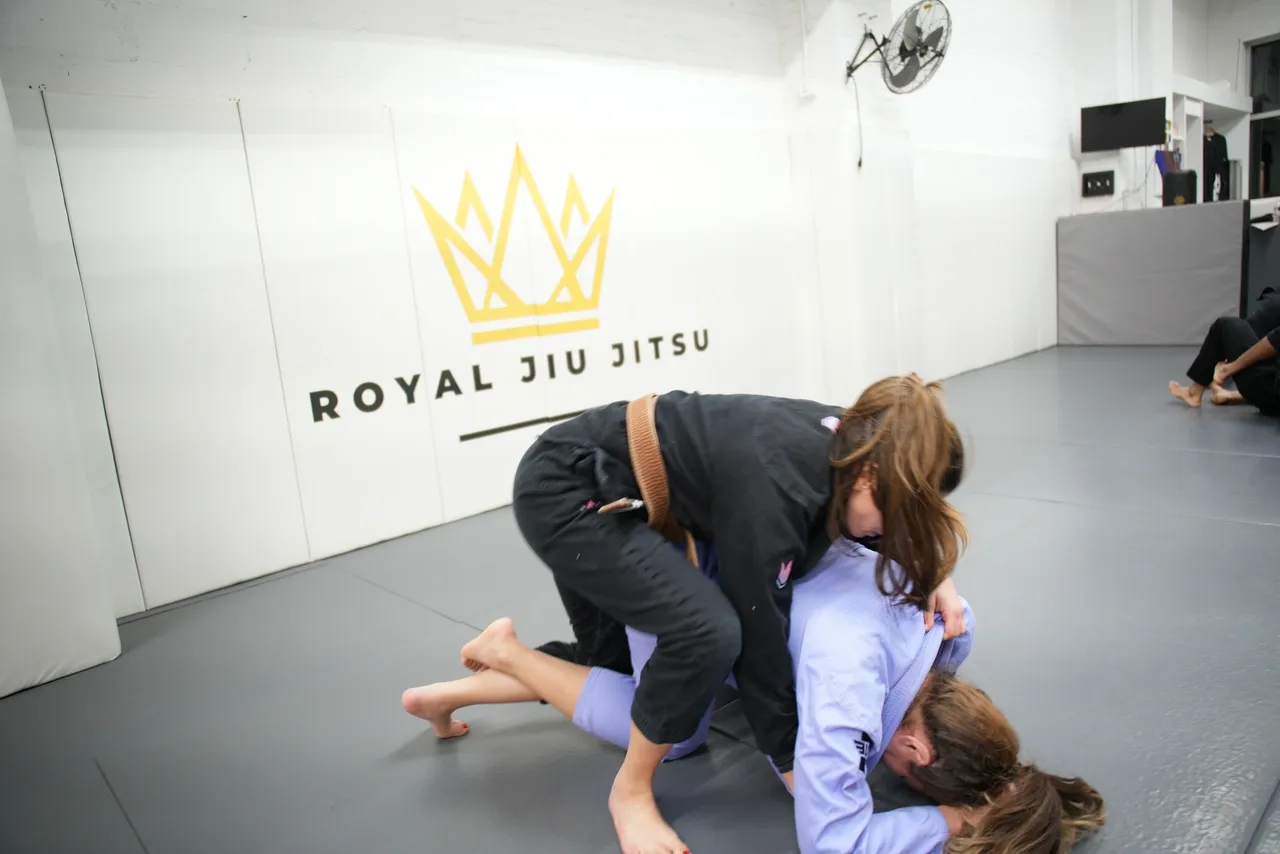
In Queens, more people are choosing grappling-based training because it builds real fitness, real skills, and real confidence at the same time.
If you have noticed more friends talking about training, comparing a sore forearm like it is a badge of honor, or looking for a workout that feels like it has a purpose, you are not imagining it. brazilian jiu jitsu has quietly turned into one of the most talked-about fitness trends in Queens because it delivers something most workouts do not: you learn while you sweat.
We see it in our classes every week. People come in for fitness, stress relief, self-defense, or a fresh challenge, and then they stick around because the training stays interesting. Your first few sessions might feel like learning a new language with your whole body, but that is also why the progress is so addictive.
In a borough that moves fast and demands a lot from you, it makes sense that a skill-based workout is catching on. You can lift weights anywhere, but you cannot get the same mix of problem-solving, conditioning, and community from a treadmill.
Why brazilian jiu jitsu fits the way Queens lives
Queens has a certain rhythm. Your day can include commuting, work, family, errands, and a million little decisions, all in the same afternoon. A workout that wastes your time is easy to quit. brazilian jiu jitsu respects your schedule because every class teaches you something tangible, even when you are tired.
Our training is built around leverage, balance, timing, and technique. That matters in a city where not everyone is the same size, and where practical skills feel relevant. You are not just moving for the sake of movement. You are learning how to control distance, stay calm under pressure, and make smart choices with your body.
For many students, the first surprise is that you do not need to be “in shape” to start. You get in shape by showing up. The second surprise is how mentally refreshing class can feel. You cannot doomscroll while you are trying to pass guard, and that is kind of the point.
The fitness results people actually want, without the boredom
A lot of fitness trends flare up because they look good on social media. This one sticks because it changes how you feel day to day. When you train consistently, your conditioning improves in a way that carries over to real life: walking up subway stairs, carrying groceries, sitting at a desk without feeling stiff, and sleeping better because your body actually worked.
brazilian jiu jitsu also trains your whole body in a balanced way. You will push, pull, hinge, rotate, and stabilize, often all in one round. That full-body demand is why people notice changes in:
• Grip strength and upper-back endurance from clinches, grips, and posture battles
• Core strength from framing, bridging, and maintaining base under pressure
• Mobility in hips and shoulders as you learn to move efficiently on the ground
• Cardio that improves fast because sparring rounds are honest, but scalable
• Coordination and body awareness that makes other activities feel easier
We also like that the workouts are not identical every day. Techniques evolve, partners vary, and your understanding deepens over time. You can train for months and still feel like you are unlocking new doors, which keeps motivation high without needing hype.
A practical self-defense angle that makes sense in NYC
Fitness is the hook for many people, but self-defense is often what makes training feel meaningful. In a crowded city, common threats tend to involve grabs, clinches, and close-range situations. brazilian jiu jitsu focuses heavily on controlling a resisting person, escaping bad positions, and using leverage rather than brute force.
We teach you how to stay composed when someone is on top of you, how to create space, and how to get back to your feet. That last part matters: the goal is not to “win a fight,” it is to give you options and help you make safer decisions under stress.
And yes, the confidence shift is real, but it is not loud or performative. It is more like quietly knowing your body can handle pressure, and that you can think clearly when things get chaotic.
Why “BJJ in Queens” feels different than a standard gym routine
When people search for BJJ in Queens, what they are often really looking for is a routine that does not feel lonely. Traditional gyms can be effective, but they can also feel like everyone is doing separate math problems in the same room. In jiu jitsu, you are learning with partners, drilling together, and helping each other improve.
That shared effort builds community fast. You start remembering names, noticing who has similar goals, and celebrating small wins like finally escaping side control without panicking. It is a different vibe than a typical workout where you put on headphones and disappear.
We also keep training structured so you are not guessing what to do next. A clear curriculum, consistent coaching, and progressive rounds help you improve without feeling overwhelmed.
The belt journey: why people stay for years, not weeks
One of the reasons brazilian jiu jitsu continues to grow is that it has a built-in long-term pathway. You are not chasing random novelty. You are building skill step by step, and the belt system gives your training a sense of direction.
It is also a reality check in a good way. A recent 2024-2025 survey of nearly 2,000 practitioners found that black belts average about 13.3 years from starting at white belt. Early belts often take around 2.3 years per rank. That sounds like a lot, and it is, but it is also why progress feels earned.
We set expectations clearly from day one: you can improve quickly, but mastery takes time. That is not a downside. It is part of what makes the practice meaningful, especially if you are tired of quick-fix fitness promises.
What a first month usually feels like, and why that is normal
Your first classes can feel like a mix of excitement and confusion. You will hear terms, learn positions, and try to coordinate your arms and legs while another person is moving too. It is normal to feel clumsy at first. We plan for that.
Most beginners go through a predictable arc:
1. Week 1: Learning basic positions, tapping early, and figuring out how to breathe
2. Week 2: Recognizing patterns like guard, mount, and side control a little faster
3. Week 3: Starting to chain simple movements and feeling less “stuck”
4. Week 4: Noticing small wins, like holding posture, escaping, or completing a pass
That early phase is where good coaching matters most. We focus on fundamentals, safety, and keeping you engaged without throwing you into the deep end.
Safety and injury concerns: the honest conversation
Any contact sport comes with risk, and we would rather address it directly. A 2019 study often cited in recent summaries reported that about 59.2% of athletes experienced an injury in the prior six months. The good news is that experienced practitioners tend to manage risk better, and beginners can reduce risk a lot by training smart.
In our classes, we emphasize:
• Tapping early and respecting taps immediately
• Controlled intensity, especially in sparring rounds
• Technique-first training, not ego-first training
• Warmups that prepare your joints and movement patterns
• Communication with partners so everyone feels safe
You do not need to “prove” anything in training. You need to learn. The strongest students long-term are usually the ones who stay consistent, not the ones who go hardest on day one.
The Queens tournament buzz and why it fuels the trend
Even if you never plan to compete, the competitive scene adds energy to training. New York regularly draws large participation in major events. For example, IBJJF New York Spring 2024 awarded 768 medals to 652 fighters across 278 divisions, which tells you how deep the local talent pool is.
That kind of activity helps explain why brazilian jiu jitsu in Queens keeps growing. When a region has frequent events and a strong culture around skill development, people train with more intention. Some students want to test themselves eventually. Others just like being in a room where progress is measurable and taken seriously.
We support both paths. Competition training and recreational training can coexist well when the environment is structured and respectful.
Cost and consistency: what Queens students should plan for
A common question we get is about monthly training costs in NYC. New York gyms are often the highest-priced in the country, with averages around $181 per month for basic tiers and about $236 per month for premium tiers. Queens fits into that reality, and pricing usually reflects class access, schedule depth, and coaching.
We keep membership options practical so you can choose a plan that matches how you want to train. Some students come two to three times a week and love the routine. Others want the flexibility of more frequent sessions as their schedule allows. Either way, consistency matters more than intensity.
If you can train even two times per week for a few months, you will feel different: stronger, calmer, and more capable. That is not marketing. That is just what repeated exposure to real resistance does.
How our programs stay beginner-friendly while still challenging
A big reason the trend is accelerating is that more adults are realizing jiu jitsu is not just for lifelong athletes. Our program is designed so you can start at any age, with any background, and still feel supported.
We separate skill building into clear steps: fundamentals, positional training, and sparring that matches your level. You will work with training partners who understand the learning process, and our coaching keeps the room organized so you are not lost.
We also make sure the class schedule fits real Queens life. Early mornings, evenings, and weekend options matter when you are juggling work and family. You can check the class schedule to find times that actually work, then build momentum from there.
Take the Next Step
Finding a fitness routine that you actually want to keep is rare, and that is exactly why brazilian jiu jitsu has become such a strong movement in this borough. When training gives you skills, community, and measurable progress, motivation stops being a struggle and starts being a habit.
If you want a place to learn the fundamentals correctly, train safely, and keep improving without feeling like you have to “be a certain type of person” first, we built our approach around that at Royal Jiu-Jitsu Queens. Come in, get a feel for the room, and let your first few classes show you why this trend has real staying power.
Turn your interest into progress by joining a free trial class in Brazilian Jiu-Jitsu at Royal Jiu Jitsu Queens.