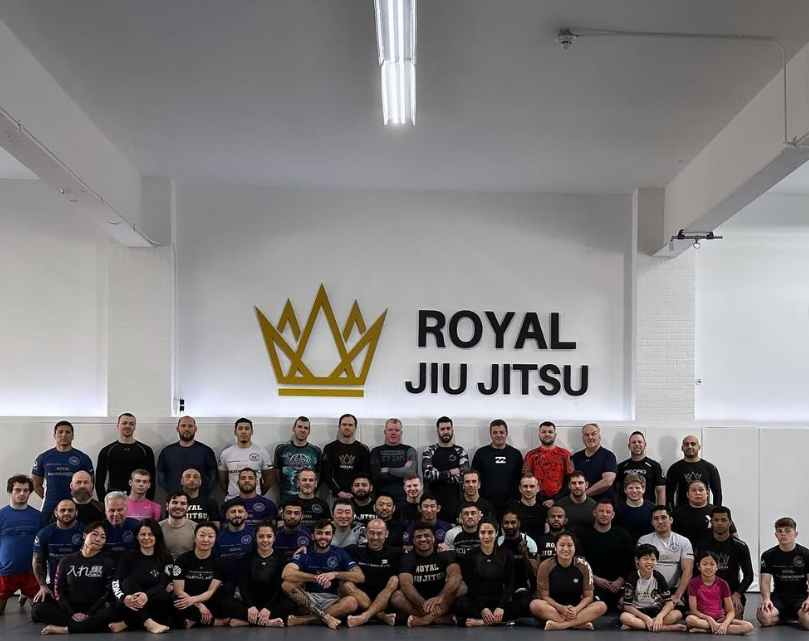
Adult Brazilian Jiu Jitsu is becoming the go-to training option in Queens because it builds real skills, real fitness, and real community in the same hour.
If you’ve noticed more friends talking about adult brazilian jiu jitsu lately, you’re not imagining it. Interest in BJJ has climbed dramatically across the U.S., with search interest up 104.35 percent from 2004 to 2024, and Queens is feeling that wave in a very local way. We see it every week: adults walking in with busy schedules, desk-stiff shoulders, and that quiet curiosity about whether grappling can actually fit into normal life.
What makes the surge especially interesting is that most adults are not joining because they want a new identity or a fight camp lifestyle. You’re probably looking for something practical: better fitness that doesn’t feel like punishment, stress relief that actually works, and self-defense skills you can trust. Our job is to make that path clear, welcoming, and sustainable from day one.
Queens is also the perfect place for this sport to grow. Neighborhoods like Astoria, Flushing, and Jackson Heights bring together professionals, students, parents, and long-time locals who want training that feels challenging without feeling chaotic. That’s the lane where adult brazilian jiu jitsu shines.
The numbers behind the BJJ boom (and why Queens is right in the middle of it)
Brazilian Jiu Jitsu is no longer a niche martial art that only a few people “discover.” In the U.S., 19.8 percent of combat sports gyms now offer BJJ training, and the IBJJF has registered and approved over 304 academies nationwide. Globally, the BJJ market is projected to grow from 1.2 billion USD in 2025 to 2.5 billion USD by 2033, which tells you this is not a short trend that disappears next year.
Adults are driving this growth. The average competitive age sits around 28, and the adult segment is the largest consumer group overall. That matters even if you never plan to compete, because it shapes what most people actually want from training: a smarter body, calmer mind, and skills that hold up under pressure.
Here in Queens, growth also comes from proximity and access. New York has a dense training culture, frequent events, and a lot of movement between neighborhoods, which makes it easier to stay consistent. Consistency is everything in this sport, and we build our program so you can keep showing up without needing a perfect schedule.
Why adult brazilian jiu jitsu fits modern adult life better than most workouts
A treadmill session can be useful, but it rarely solves the problem you actually came in with. Most adults want training that checks multiple boxes at once, because time is limited and energy is real. In adult brazilian jiu jitsu, you’re learning a skill while improving conditioning, flexibility, balance, and decision-making.
What surprises many beginners is how “mental” the workout feels. You’re not just sweating, you’re solving. You’re constantly answering small questions: Where is your base? Where are your hands? What happens if your opponent turns their hips? That engagement is a big reason people stick with it longer than standard gym routines.
There’s also a built-in progression that suits adult learners. You don’t need to be athletic to start, but you do need a plan that builds you up in layers. We teach that way: fundamentals first, then controlled resistance, then more freedom as your timing and confidence improve. It’s not flashy, but it works.
BJJ in Queens: a training culture that matches the borough
Queens is diverse, crowded, fast-moving, and full of people juggling a lot. So when someone asks us why BJJ in Queens is taking off, the answer is simple: it matches the energy here. You get a place to focus hard for an hour, leave the outside noise at the door, and walk back out feeling sharper.
We also notice that adults in Queens value practicality. You want training that feels relevant to real life, not a performance. Brazilian Jiu Jitsu is leverage-based, which means size and strength help, but technique changes the whole equation. That’s part of the appeal for professionals, commuters, and parents alike: you’re investing in a capability, not just burning calories.
And because Queens neighborhoods are so connected, it’s easier to build momentum. When training is accessible, you’re more likely to hit that sweet spot of consistency that produces real change.
The four big reasons adults start, and why they stay
Adults often come in with one main goal, then realize the benefits stack up quickly. In our experience, retention happens when training solves multiple problems at once and still feels enjoyable. Nationally, BJJ gym retention averages around 60 percent over 12 months, which is strong in the fitness world, and we understand why.
Here are the motivations we hear most often, especially from people trying brazilian jiu jitsu classes for adults for the first time:
• Sustainable fitness that doesn’t feel repetitive, because every round and every partner is a different puzzle
• Practical stress relief, since focused grappling tends to quiet the mental background noise you carry all day
• Functional self-defense skills built around control, escapes, and leverage instead of relying on athleticism
• A real community rhythm, where you recognize faces, learn names, and gradually feel like you belong
None of this requires you to be “tough.” It requires you to be willing to learn, tap when you need to, and come back. That’s the actual secret.
Training frequency: what most adults need to see results
One of the most common questions we get is how often you should train. Most beginners benefit from 2 to 3 sessions per week to see results, and that lines up with what we see on the mats. At that frequency, you progress fast enough to feel motivated, but not so fast that your body can’t keep up.
If you can only make it twice a week, we’d rather you train twice consistently than try to cram in five sessions and disappear for a month. Progress in adult brazilian jiu jitsu looks a lot like compound interest: small, steady deposits that add up in surprising ways.
We also plan classes with adults in mind. You might be dealing with work travel, parenting, or just the reality of Queens commutes. A good program expects that and still gives you a clear path forward.
What your first month typically feels like (so you’re not surprised)
The first few classes are usually a mix of excitement and mild confusion. That’s normal. You’ll learn positions, basic escapes, and how to move on the ground in a way that your body probably hasn’t done since you were a kid. Expect to feel a little sore in new places, especially your grip and your core.
By week two or three, most students start recognizing patterns. You’ll begin to understand why posture matters in someone’s guard, why frames save energy, and why breathing makes such a difference when you’re stuck under pressure. This is also when stress relief becomes obvious. You leave class tired, sure, but it’s a clean kind of tired.
By the end of the first month, you’ll probably have a few “small wins” that feel big: escaping side control once, maintaining top position longer, or staying calm while someone tries to sweep you. Those moments are what keep people training.
A safer, smarter approach to intensity (because adults have responsibilities)
A lot of adults hesitate because they assume BJJ is constant hard sparring. In reality, quality training is controlled and progressive. We set expectations around tapping early, training with control, and treating partners like teammates. That culture matters, because it lets you train hard without feeling like you have to prove something every night.
We also scale intensity. Some days are more technical, some are more conditioning-focused, and some include live rounds where you apply what you’re learning. You don’t need to match anyone else’s pace. You need to stay consistent and keep learning.
If you’re over 30, over 40, or just feeling out of shape, you’re not alone. Adult brazilian jiu jitsu works best when it respects where you’re starting from and still challenges you to improve.
Women in BJJ: why participation is rising and what that changes on the mats
Women’s participation in BJJ is rising nationwide, tracking broader martial arts trends approaching a 40 percent female split. That’s not just a statistic, it changes the training environment in a good way. When more women join, classes tend to become more skill-focused, more detail-oriented, and more supportive of learning at different paces.
For many women, the draw is straightforward: you want practical self-defense skills, but you also want a training room that takes safety seriously and prioritizes technique over ego. We build our curriculum around leverage, control, and intelligent decision-making, which are exactly the things that translate well for smaller bodies and real-world scenarios.
And honestly, the confidence shift is noticeable. It’s not loud confidence. It’s quiet, grounded, and it tends to show up in daily life.
What you actually learn in brazilian jiu jitsu classes for adults
Adults often ask what the curriculum really includes, beyond just “rolling.” We keep learning structured so you can build a foundation without feeling scattered. A typical progression includes:
1. Positional fundamentals like guard, side control, mount, and back control, so you understand where you are and what matters
2. Escapes and defense first, because staying safe and getting out matters more than collecting moves
3. Takedown and standing concepts that fit adult bodies and real balance, not risky highlight-reel shots
4. Submissions introduced with control, emphasizing mechanics and partner safety
5. Live training in controlled rounds, where you test skills with clear expectations and coaching
This is where adult brazilian jiu jitsu becomes addictive in a healthy way. You can feel yourself improving, and it’s measurable. You’re less panicked, more aware, and more efficient.
The “Queens adult” advantage: stress relief and mental clarity that lasts past class
Queens can be intense. Between work, family obligations, crowded trains, and constant notifications, your brain rarely gets a clean reset. BJJ gives you one. During training, you cannot multitask. You have to be present, and that forced presence is one of the best stress-management tools we’ve seen.
Adults also like that it’s social without being performative. You talk before class, you partner up, you learn together, and you leave knowing you did something real. Over time, that becomes a reliable weekly rhythm, which is something many adults don’t realize they’ve been missing.
If you’ve been searching for BJJ in Queens because you want a healthier outlet, this is the kind of practice that builds both calm and capability.
Take the Next Step
Building real skill takes time, but it shouldn’t feel complicated to begin. At Royal Jiu-Jitsu Queens, we keep adult brazilian jiu jitsu structured, welcoming, and progress-driven so you can train consistently, learn safely, and actually enjoy the process as your fitness and confidence grow.
If you’re looking for brazilian jiu jitsu classes for adults that fit Queens life, our goal is to give you a clear starting point and a training environment you can stay with for the long haul, whether your focus is self-defense, stress relief, or simply getting stronger in a way that feels practical.
Experience first-hand what makes training at Royal Jiu Jitsu Queens special by joining a free trial class today.