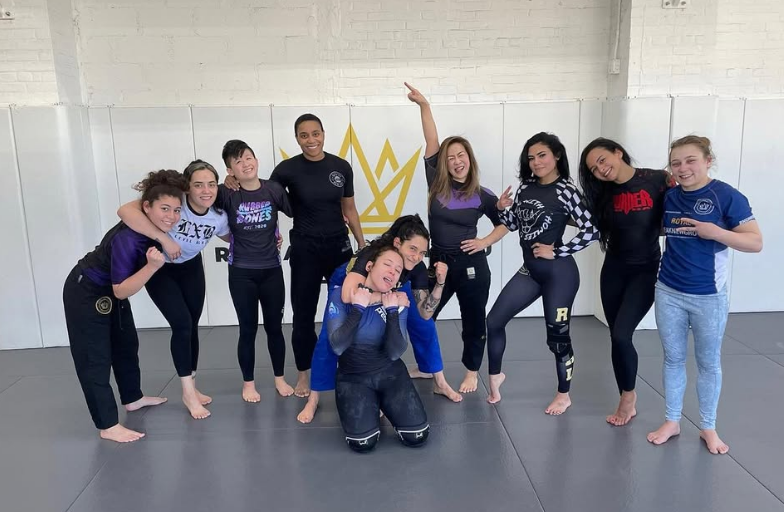
Your first class should feel welcoming, structured, and surprisingly doable, even if you have never trained before.
Walking into your first brazilian jiu jitsu class can feel like stepping into a new language. There are gis, belts, unfamiliar movements, and a room full of people who seem to know exactly where to stand. The good news is that we plan for that. Our beginner-friendly approach is built around clear instruction, safety, and a pace that helps you learn without feeling rushed.
Brazilian jiu jitsu is also growing fast across the U.S., and we see why every day on the mats. People are showing up for self-defense, fitness, stress relief, and the simple satisfaction of learning a skill that takes focus. In Queens, that mix matters, because your schedule, your background, and your goals can look totally different from the person next to you, and our classes are designed to handle that variety.
If you are curious about brazilian jiu jitsu in Queens, this guide will walk you through what your first class looks like, what to bring, how training is structured, and how to get the most out of your first few weeks.
Before You Arrive: What to Wear, What to Bring, and What Not to Worry About
Your first class goes smoother when a few small details are handled ahead of time. Comfort and cleanliness matter in BJJ, but you do not need fancy gear to start.
If you already have a gi, bring it. If you do not, you can begin in athletic clothing, as long as it is fitted enough that it will not snag or shift constantly. Think rashguard or athletic tee, and shorts or leggings without zippers or pockets. We will help you sort out uniform details once you decide you want to keep training.
A few quick reminders that make everyone safer and more comfortable:
• Bring water and arrive a little early so you can settle in without rushing
• Trim your fingernails and toenails before class to prevent accidental scratches
• Avoid jewelry, watches, and anything that can catch during drills
• Wear sandals or slides for walking off the mats, since mats stay shoe-free
• Expect to sweat, so pack a small towel if you like having one nearby
If you are nervous about fitness level, flexibility, or being new, you are not alone. Most beginners share that feeling. Our job is to give you clear steps and a safe environment so you can focus on learning.
What the First Class Usually Looks Like
Most first-time students worry that class will be chaotic or intense from the start. In reality, we keep things structured and beginner-appropriate, while still giving you the real experience of BJJ in Queens: movement, technique, partner work, and a sense of how it all fits together.
Check-In and a Quick Orientation
When you arrive, we will get you checked in and answer the practical questions first, where to put your stuff, where to line up, how the class flow works. That small clarity matters, because it lets you breathe a bit and stop scanning the room trying to guess what comes next.
We also set expectations around tapping, controlled movement, and communication. In brazilian jiu jitsu, tapping is not losing. It is how we train safely and consistently, especially as a beginner.
Warm-Up That Matches the Sport
Warm-ups in BJJ are different than a typical gym workout. You will move in ways that prepare you for grappling: hips, core, shoulders, and controlled motion on the ground. If a movement feels awkward, that is normal. We would rather you move carefully than fast.
You might see basic drills like shrimping, bridging, or technical stand-ups. These become useful tools quickly, and you will feel that progress sooner than you expect.
Technique Instruction, Step by Step
Technique is the heart of class. We demonstrate a movement, explain what it is for, and then break it into pieces so you can practice it with a partner. Good training is not about collecting 20 moves in one night. It is about understanding a few concepts and repeating them enough to feel real.
Early on, you will see fundamentals like posture, base, frames, and how to stay safe in common positions. Those concepts are what make future techniques easier to learn.
Partner Drilling in a Controlled Pace
Partner work is where beginners often feel the most uncertain. We pair you thoughtfully, and we encourage communication. If you need to slow down, you say so. If something hurts or feels wrong, you stop and reset. That is normal training culture, not an interruption.
In BJJ in Queens, you will meet training partners of different sizes and backgrounds. That variety is a feature, not a problem, because it teaches you how leverage and positioning really work.
Optional Sparring, With Smart Boundaries
Some classes include sparring, sometimes called rolling. If you are brand new, we do not throw you into a hard round and hope for the best. We guide you, set boundaries, and often use positional sparring so you can focus on one scenario at a time.
Your first roll might feel like trying to solve a puzzle while someone else is also solving a puzzle. That is part of the process. You learn by doing, then you ask questions, then you do it again with a little more awareness.
Safety and Etiquette: How We Keep Training Productive
Brazilian jiu jitsu is a contact sport, so safety is not optional. It is built into how we teach, how we pair students, and how we expect everyone to behave.
We keep a close eye on intensity, especially with new students. The fastest way to get better is staying consistent, and consistency comes from training in a way your body can handle.
A few etiquette points help classes run smoothly:
• Tap early and tap clearly, and stop immediately when your partner taps
• Keep movements controlled, especially during transitions and takedown practice
• Ask questions after the rep or at appropriate moments, and we will gladly clarify
• Focus on learning, not “winning” a drill, because drills are for development
• Keep hygiene tight, clean gear, clean body, and a respectful training space
If you have an old injury, limited mobility, or worries about contact, tell us. We can modify positions, adjust training intensity, and help you progress without feeling like you are falling behind.
What You Will Actually Learn as a Beginner
It is easy to watch advanced grappling and assume it is all complicated submissions. Beginner training is more practical than that. We teach you how to move safely, escape bad positions, control distance, and build confidence step by step.
In your first weeks, you will typically work on:
Escapes and Survival Skills
Knowing how to get out from under pressure is empowering. You will learn frames, hip movement, and how to regain guard. These skills also reduce panic, which is a big deal for beginners.
Guard, Top Control, and Positional Awareness
You will start to understand where you are in the “map” of grappling: guard, side control, mount, back control. Once positions make sense, techniques stop feeling random.
Submissions, Introduced Responsibly
Yes, you will learn submissions, but with a strong focus on control and safety. Proper mechanics matter more than strength. We also emphasize when not to force something, because forcing is where beginners often get stuck.
Fitness and Wellness Benefits You Can Feel Quickly
Brazilian jiu jitsu is a full-body workout, but it does not always feel like traditional cardio. You will breathe hard, use your legs and hips in new ways, and build functional strength through movement.
A single class can burn hundreds of calories, and martial arts training can elevate heart rate into an aerobic zone that supports cardiovascular health. Over time, many students notice better posture, improved flexibility, stronger core engagement, and more endurance in daily life.
There is also the mental side. Training asks you to focus on one thing at a time. For a lot of youths in Queens, that hour on the mat becomes a reset button, not because life gets quieter, but because your attention becomes clearer.
How Often Should You Train to See Progress?
Most beginners do best with a realistic, repeatable schedule. We generally recommend training 2 to 3 times per week. That frequency is enough to build skill and conditioning without feeling like your body is constantly trying to catch up.
More training can be helpful, but it only works if recovery and consistency stay intact. Two classes a week for months beats five classes a week for two weeks. Progress in BJJ is a long game, and that is part of what makes it rewarding.
Women, Teens, and Families: What to Expect From Our Training Culture
BJJ has grown significantly among women, in part because it is leverage-based and does not rely on size or strength the way people assume fighting does. We keep our environment respectful and technical. If you are training for self-defense, confidence, or just wanting a sport where your progress is measurable, you will find a path here.
Queens is full of families, students, and professionals juggling busy schedules. We see parents training alongside teens, adults returning to fitness after years away, and complete beginners finding a new routine that actually sticks. Our programs are built to support that kind of real life.
If you are looking at brazilian jiu jitsu in Queens as a family activity, expect structure, clear expectations, and coaching that emphasizes character alongside technique. On the mat, kids learn balance, coordination, and discipline. Off the mat, we reinforce respect, patience, and consistency.
Your First Month: A Simple Timeline That Keeps You Grounded
The first month can feel like a lot, so it helps to know what “normal” progress looks like. Here is a practical way to think about your first few weeks:
1. Week 1: Learn basic movement, tapping, and a few key positions without trying to memorize everything
2. Week 2: Start noticing patterns like posture, frames, and when you are safe versus exposed
3. Week 3: Drill with more confidence and begin recognizing escapes and controls during live rounds
4. Week 4: Feel more comfortable with class flow, start asking better questions, and track small wins
Those small wins matter. Maybe you escaped side control once. Maybe you remembered to breathe. Maybe you showed up three times in a week. That is how real progress in brazilian jiu jitsu is built.
Take the Next Step
Building skill in brazilian jiu jitsu is not about showing up already confident, it is about training in a place where confidence gets built through structure, repetition, and support. That is the experience we focus on every day, especially for first-timers who want clear guidance and a safe start.
When you are ready to try BJJ in Queens, we would love to welcome you in and help you get oriented from the moment you step on the mats. At Royal Jiu-Jitsu Queens, our classes are designed to meet you where you are, then help you progress with purpose.
No experience is required to begin. Sign up for a free Brazilian Jiu-Jitsu trial class at Royal Jiu Jitsu Queens.