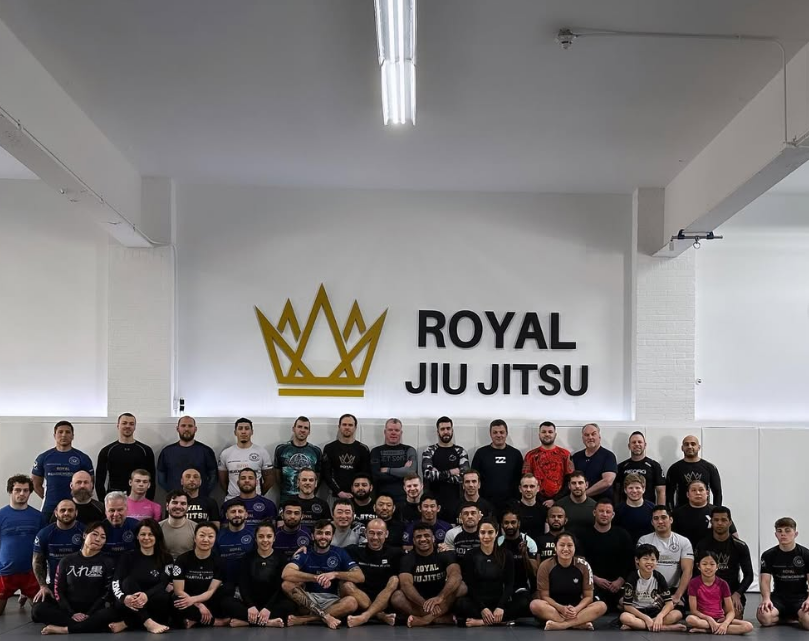
In Queens, the fastest way to feel stronger, safer, and more connected is to train consistently with a real team.
Queens has always been a place where cultures, schedules, and ambitions collide in the same few subway stops, and that energy shows up in training too. We see it every week: people walking in for brazilian jiu jitsu because they want practical self-defense, a better workout than the treadmill, or a hobby that actually sticks. And once you start, you realize the community aspect is not a bonus, it is the whole engine.
Brazilian jiu jitsu is growing nationally, but Queens has its own momentum. Local competition scenes keep standards high, and everyday students keep the rooms full. In New York, IBJJF events like the Spring 2024 tournament awarded 768 medals to 652 fighters across 278 divisions, which tells you something important: there is real participation here, not just online hype. That kind of turnout pushes everyone to take training seriously, even if your personal goal is just to feel confident walking home after work.
If you have been curious about BJJ in Queens, you are not alone. Our job is to make the first step feel simple, safe, and worth your time, while giving you a clear path to progress that matches the reality of life in NYC.
Why brazilian jiu jitsu is booming in Queens right now
Queens is dense, busy, and surprisingly athletic once you look closely. People here want training that does multiple jobs at once: fitness, self-defense, stress relief, and community. Brazilian jiu jitsu checks all of those boxes because it is skill-driven and scalable. You can train hard without needing to be the biggest person in the room, and you can keep learning for years without getting bored.
We also think the growth is tied to something more practical. In a borough where you are on public transit, walking at night, juggling work and family, it helps to have a self-defense system built around control. BJJ is not about trading punches. It is about distance, grips, balance, and using leverage to manage a situation. That is a comforting idea in a city where you cannot control everything, but you can control your preparation.
Queens has another advantage: variety. Our mats bring together different ages, backgrounds, and reasons for training. You will meet students who love the sport side, students who want a better workout, and students who simply want to feel more capable in daily life. That mix creates a strong culture, because you are learning with real people, not just “fighters.”
What makes brazilian jiu jitsu different from typical workouts
A lot of fitness plans fail because they feel like chores. BJJ is different because it gives your brain something to do while your body works. You are solving problems in real time: how to escape, how to keep balance, how to stay calm when you are tired. That makes the workout feel almost accidental, in a good way.
From a physical perspective, you build:
• Functional strength through pulling, framing, bridging, and controlled pressure
• Conditioning that comes from short bursts of effort and steady movement
• Mobility and body awareness as you learn how your hips, spine, and shoulders actually move
• Coordination and balance that carries over into everyday life
Mentally, the benefits are just as real. The rounds teach patience. The techniques teach discipline. And the simple routine of showing up a few times a week can do wonders for stress. People often tell us they sleep better once training becomes consistent, which makes sense when you are finally burning energy and turning your brain off for an hour.
Brazilian jiu jitsu in Queens means community, not just classes
If you have ever joined a gym and felt invisible, we understand why you might hesitate to start something new. Our culture is built around training partners, not solo workouts. You learn because someone lets you practice. You improve because someone gives you realistic resistance without trying to “win” the warm-up. That only works when the room has respect.
One of the best parts of brazilian jiu jitsu in Queens is that it naturally creates friendships without forcing it. You train, you laugh when something goes wrong, you ask questions, you figure it out together. Over time, you start recognizing faces, then names, then you realize you have a team.
Queens also has a strong competition presence, even if you never plan to compete. The same events that draw hundreds of fighters also raise the local technical level. When IBJJF tournaments in New York pull in deep brackets and award hundreds of medals, it signals that the region is active, motivated, and improving. That energy trickles down into day-to-day training, making classes sharper and more focused.
We are not sharing this to push you toward competition. We are sharing it because it reflects participation and seriousness in the area, which benefits everyone training in Queens. When the scene is healthy, beginners get better instruction, intermediates get better training partners, and advanced students keep sharpening the room.
What you can expect in your first few weeks
Starting is usually the hardest part, mostly because you do not know what you do not know. Our beginner experience is structured to remove that uncertainty. We focus on fundamentals that keep you safe and help you feel useful early: how to move on the ground, how to protect your neck, how to tap, and how to control position.
In the first few weeks, you will usually work on:
• Basic positions like guard, side control, mount, and back control
• Escapes that prioritize safety and calm breathing
• Simple submissions introduced with control and responsibility
• Positional sparring where you start in a set scenario and work one goal
• Live rounds when you are ready, at a pace that makes sense for you
You do not need to be “in shape” first. Training is what gets you in shape. If you are nervous about cardio, you are in good company. Most people feel winded early on, and then one day you notice you are recovering faster and thinking more clearly mid-round. That is a great feeling.
How often should beginners train in BJJ in Queens?
Consistency beats intensity. For most beginners, we recommend training 2 to 3 times per week. That pace gives you enough repetition to remember techniques while leaving room for your body to adapt. It also reduces the risk of overuse injuries, which matters because BJJ uses grips, neck positioning, and joint angles you might not be used to.
As you settle in, you can adjust based on your goals. If you want faster skill growth, you can add sessions gradually. If you are balancing work, family, and commuting, two well-focused sessions per week can still move you forward.
A useful mindset is this: you are not cramming for an exam. You are building a long-term skill. A late 2024 and early 2025 survey of nearly 2,000 practitioners found the average time to black belt was 13.3 years, with progress slowing at higher ranks. That is not discouraging, it is freeing. You are allowed to learn at a human pace.
Gear, etiquette, and what to bring to your first class
You do not need a shopping spree to begin. You can start with minimal equipment and add items as you commit. If you are training in the gi, you will eventually want your own, but you can begin with what we provide and what you already own.
For your first class, plan to bring:
• Comfortable training clothes or no-gi gear like a rash guard and shorts with no pockets
• Water, because you will use it
• Basic hygiene items like a small towel and a fresh shirt for after class
• An open mind and willingness to ask questions
Mat etiquette is simple: keep your nails trimmed, show up clean, and tap early when you are caught. Nobody is impressed by refusing to tap. We would rather you train tomorrow than “win” a beginner round today.
Safety, injury risk, and how we reduce it
BJJ is a contact sport, and it comes with real injury risk. A commonly cited 2019 study reported 59.2 percent of practitioners had an injury in the prior six months, with higher rates tied to frequent training. We take that seriously, and we coach you to train in a way that keeps you progressing.
Safety is not just rules, it is habits. We emphasize:
• Controlled pace, especially for newer students
• Clear communication with training partners
• Tapping early and respecting taps immediately
• Technique over strength, so you avoid muscling into bad positions
• Smart training volume, so you recover between sessions
We also believe that learning defense early is protective. If you understand posture, frames, and escapes, you are less likely to get stuck in awkward positions that lead to sprains. And when you feel comfortable speaking up about intensity, your training stays sustainable.
Real-world self-defense benefits in a dense city
Queens life is real life: crowded sidewalks, tight spaces, unpredictable moments. Brazilian jiu jitsu focuses heavily on control, balance, and staying calm under pressure. That translates well to self-defense because it teaches you how to manage distance and neutralize threats without needing to match someone’s size.
We train skills that matter outside the gym:
• How to stand up safely if you end up on the ground
• How to control grips and prevent someone from closing distance
• How to escape common holds and pins
• How to stay composed when your heart rate spikes
Self-defense is also mental. You learn to recognize when to disengage, when to create space, and when to prioritize getting home safely. We keep the training practical while staying respectful and controlled in class.
Progress, belts, and what “getting good” actually looks like
Belts matter, but they are not the point. The point is skill. A survey of nearly 2,000 practitioners showed average time at white belt was about 2.3 years, blue belt about 2.3 years, and purple belt about 5.6 years, with black belt averaging 13.3 years total. That progression reflects what most people experience: early learning feels fast, then it becomes deeper and more detailed.
We help you track progress in ways that feel real:
• You escape positions that used to trap you
• You last longer without panicking
• You recognize patterns and anticipate transitions
• You can train with different body types and still apply technique
Some days you will feel sharp, other days you will feel like you forgot everything. That is normal. Progress in brazilian jiu jitsu is not a straight line, but it is very dependable if you keep showing up.
Membership options, class structure, and making training fit your life
People in Queens have real schedules. We design our class structure to be repeatable and flexible so you can train before work, after work, or on weekends depending on what your week looks like. The class schedule page on the website is the simplest way to map your training around commuting, kids, or rotating shifts.
We also keep the onboarding process straightforward. You can try a class, ask questions, and get a feel for the room before you commit. We offer rental gear options so you are not blocked by equipment on day one. Once you decide to continue, we will help you choose a training frequency that supports your goals, whether that is general fitness, self-defense, or long-term technical development.
The bigger point is this: you should be able to train without turning your life upside down. When training is realistic, it becomes consistent, and consistency is where the benefits show up.
Take the Next Step
If you want to experience brazilian jiu jitsu in a way that feels structured, welcoming, and built for real Queens schedules, we would love to train with you at Royal Jiu-Jitsu Queens. We focus on fundamentals, safety, and steady progress so you can build skill without feeling overwhelmed by the learning curve.
The community here is growing for a reason. When you train consistently, you gain practical self-defense, better conditioning, and a team that makes it easier to keep showing up. If you are ready to see what BJJ in Queens can look like when the environment is supportive and the coaching is clear, our doors are open.
Become part of a welcoming Brazilian Jiu-Jitsu community by signing up for a free trial class at Royal Jiu Jitsu Queens.