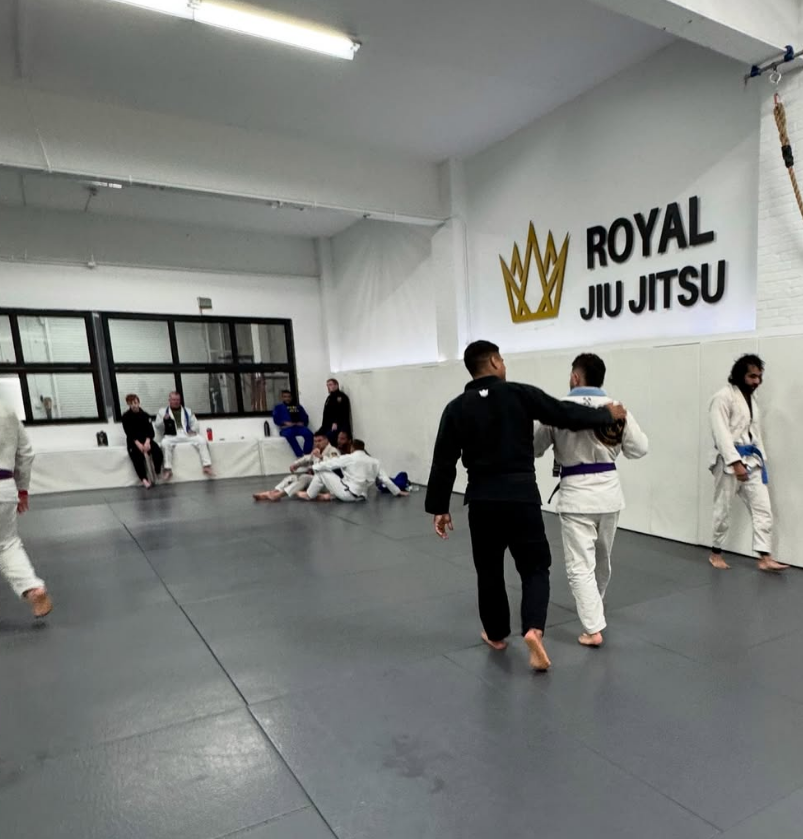
Brazilian jiu jitsu has a way of turning everyday stress into steady progress you can actually feel.
Queens moves fast, and it asks a lot of you. Between commutes, long workdays, family responsibilities, and the constant noise of the city, it is easy to feel like your energy gets spent everywhere except on yourself. Brazilian jiu jitsu gives you a different pattern: you show up, you train, you learn something real, and you leave a little better than you arrived.
We see it in beginners all the time. At first, you might come in for fitness or self-defense, but the deeper changes usually show up in places you did not expect: calmer reactions under pressure, better focus at work or school, and a confidence that does not need to be loud to be strong. If you are exploring brazilian jiu jitsu in Queens, you are not just picking up a new hobby. You are choosing a practice that rewards patience, consistency, and a willingness to grow.
In Queens neighborhoods like Astoria, Flushing, and Jackson Heights, our mats bring together a mix of people who might never meet otherwise. That community element matters. Training partners become familiar faces, then supportive teammates, and eventually the kind of friends who notice when you have been pushing through a tough week and remind you to keep going.
Why Brazilian Jiu Jitsu Builds Real Growth, Not Just New Skills
Brazilian jiu jitsu is often described as problem-solving with your body. Every round presents a puzzle: balance, timing, leverage, and decision-making under pressure. The growth comes from learning to stay present while you work through that puzzle.
When you are new, the pace can feel like a lot. But that is also the point. In a safe training environment, you can practice staying composed while your heart rate climbs and your brain wants to rush. Over time, that carries into daily life. You start handling stress in traffic, at meetings, or in crowded places with more control because you have trained that skill, not just talked about it.
Queens is a place where personal space can feel limited, and confidence has to be practical. We focus on technique that helps you feel capable, not reckless. You learn how to frame, escape, and regain position. You learn how to protect yourself without needing to be bigger or stronger than the person in front of you. That is one of the quiet, powerful lessons of brazilian jiu jitsu: skill changes the equation.
The Physical Side: Fitness You Can Use
A lot of workouts feel repetitive, and it is hard to stay motivated when the results are mostly numbers on a screen. BJJ training keeps you engaged because there is always something to learn, and you can feel progress in your movement.
A typical class trains strength, mobility, and cardio at the same time. You are bridging, shrimping, standing up in base, gripping, and moving through positions that build functional strength. Many students are surprised at how quickly their endurance improves, especially when they train 2 to 3 times per week and keep it consistent.
Here are a few fitness changes we commonly see as students settle into a steady rhythm:
• Better full-body coordination from learning how to move hips, shoulders, and posture as one unit
• Stronger core and grip strength from controlling frames, grips, and pressure safely
• Increased mobility in areas that get tight in city life, especially hips and upper back
• Improved conditioning from rounds that alternate between technical control and bursts of effort
• More consistent sleep and recovery habits because training makes you notice what your body needs
Those benefits are a big reason BJJ in Queens has become a fitness choice for professionals, students, and families, not just people who want self-defense.
The Mental Side: Resilience You Can Practice
Mental toughness is not just about pushing harder. In brazilian jiu jitsu, it often looks like slowing down, breathing, and making a smarter decision when you are tired. That is a different kind of strength, and it is one of the most valuable things you can take off the mat.
We also appreciate how BJJ gives you immediate feedback without being personal. If a technique works, it works. If it does not, you adjust. That helps you build a healthier relationship with mistakes. Instead of feeling stuck, you learn to treat missteps as information.
Over time, many students report better stress management and more stable confidence. That matches wider practitioner reports, where people describe improvements in confidence, coping skills, and social connection. It is not magic, but it is reliable if you keep showing up.
Community in Queens: Training Partners Become Your Support System
Queens is diverse, busy, and sometimes a little anonymous. It is possible to live here and still feel disconnected. Training changes that because you are working closely with others, solving problems together, and learning how to communicate without ego.
In class, you rotate partners. You get used to introducing yourself, asking questions, and working with people of different sizes and experience levels. Those small social moments add up, especially if you are new to the borough or just want a healthier routine that includes other humans.
The culture we aim to build is respectful and structured. You will feel challenged, but you should also feel safe. We take pride in clean coaching, clear expectations, and training partners who understand that everyone is there to improve.
Belt Progression: A Long-Term Framework for Discipline
One reason brazilian jiu jitsu creates personal growth is that it is not built for quick wins. Progress is real, but it is earned. Globally, there are over 10,000 registered BJJ black belts, and the average time investment is significant: about 2.3 years to blue belt, 5.6 years to purple, 9.0 years to brown, and 13.3 years to black. That timeline is not meant to intimidate you. It is meant to show that the art respects consistency.
We like to explain belt progression as a structure for habits. You are not just learning moves. You are practicing patience, learning how to handle plateaus, and building pride in small improvements. If you have ever quit a fitness routine because you did not see results fast enough, BJJ can be a refreshing reset. It teaches you to value the process.
What “Getting Better” Looks Like in the First Few Months
Early growth often shows up in ways beginners do not expect. You might not feel “good” right away, but you will notice changes:
You breathe more calmly in uncomfortable positions. You remember one escape that works. You tap earlier and safer instead of trying to force things. You stop panicking when you are pinned and start building frames. Those are big wins, even if they look small from the outside.
Queens Competition Energy: Motivation Without Pressure
Not everyone wants to compete, and you do not have to. But it helps to know you are training in a region with real participation. In New York, the IBJJF New York Summer 2024 tournament awarded 630 medals to 521 fighters across 243 divisions. That kind of turnout says a lot: people are training seriously, and the local scene is active.
We use that energy in a healthy way. Competition can be a tool, not a requirement. Some students set a goal to test themselves once. Others prefer to keep training purely for personal development. Either path is valid, and we coach you according to what you want out of the experience.
Safety and Smart Training: Progress Without Burning Out
A good program balances intensity with longevity. BJJ is a contact sport, and responsible coaching matters. A 2024 to 2025 survey of nearly 2,000 practitioners noted injury rates around 59% in the prior six months for athletes, with experience tending to reduce risk. That is a useful reminder to train intelligently, especially as a beginner.
We build safety into the way we run class: controlled rounds, clear tapping culture, and progressive drilling. You will learn when to push and when to reset. We also encourage a simple mindset: train today so you can train tomorrow. Consistency beats short bursts of overtraining.
Practical Recovery Habits That Help
You do not need a complicated routine. A few basics go a long way in brazilian jiu jitsu:
• Train 2 to 3 times per week at first to build technique without overload
• Hydrate and eat enough protein to support muscle repair and energy
• Sleep like it matters, because it does
• Communicate with partners if you are sore or returning from time off
• Ask questions, especially when a position feels risky or confusing
Those habits are part of personal growth too. Taking care of yourself is a skill.
What to Expect in Your First Class in Queens
Most people feel a mix of curiosity and nerves before the first session. That is normal. We keep the structure clear so you can relax and focus on learning.
You will usually start with a warm-up designed for BJJ movement, then technique instruction, then drilling with a partner. Depending on the class, there may be positional sparring or live rounds with guidance. You can participate at a level that makes sense for you. Nobody expects perfection, and you are not supposed to “win” training.
What to Bring and Wear
You can start with comfortable athletic wear. If you are training in a gi class, we can help you get the right uniform and fit. If you are training no-gi, rash guards and shorts are typical. The main goal is to wear something you can move in and that is appropriate for close-contact training.
How Often Should You Train for Results?
For most beginners, 2 to 3 sessions per week is the sweet spot. It is enough frequency to build skill and conditioning, but not so much that you feel wrecked. If your schedule is unpredictable, even 2 days per week can create momentum if you stay consistent over a few months.
If you want faster technical progress, you can add sessions gradually, but we recommend earning that increase by listening to your recovery. BJJ in Queens can fit into real life, including shift work, school schedules, and parenting. The best plan is the one you can sustain.
Membership and Program Options: Choosing a Path That Fits Your Life
Personal growth happens when training becomes part of your routine, not a one-time burst. We offer program options that support different goals, whether you want a steady beginner track, a more intensive schedule, or a family-friendly rhythm that makes sense for Queens life.
To keep it simple, we encourage you to think in terms of your “why”:
Are you here for fitness? Self-defense confidence? Stress relief? A social outlet? A long-term martial arts journey? Your answer shapes the schedule you pick and how we coach your progress.
Take the Next Step
Building a stronger body is great, but the bigger change is learning how to stay calm, curious, and persistent when things get hard. That is what brazilian jiu jitsu teaches, and it is why the practice fits Queens so well. The city challenges you daily, and training gives you a place to turn that pressure into skill and confidence.
When you are ready to experience that process in person, we would love to welcome you at Royal Jiu-Jitsu Queens and help you find a realistic training rhythm that matches your goals, your schedule, and your starting point.
Develop consistency and elevate your skills by joining a Brazilian Jiu-Jitsu class at Royal Jiu-Jitsu Queens.