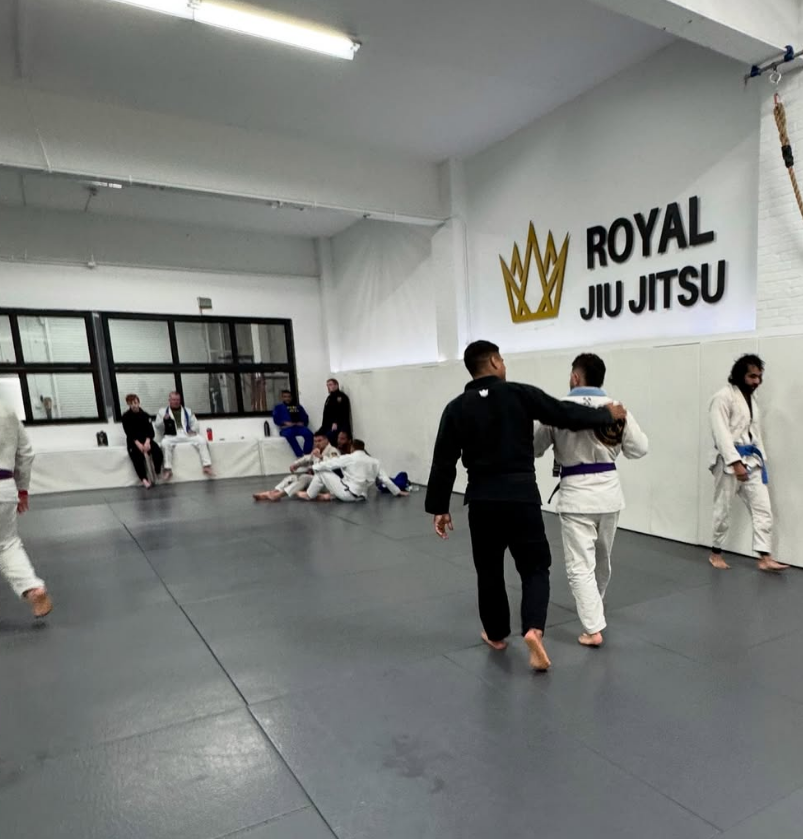
In Queens, fitness is shifting from counting reps to building real skill you can feel every round.
Queens has never been a one-lane borough when it comes to health and training, and that is exactly why brazilian jiu jitsu fits here so well. More people want workouts that do something: build conditioning, sharpen focus, and teach practical movement instead of only chasing a number on a screen. We see it every week on the mats, especially from students who are tired of “starting over” with fitness routines that never really stick.
What surprises many beginners is how quickly training changes what “in shape” means. In a single class, you will move through pushing, pulling, bracing, hinging, squatting, and rotating, but in a way that stays interesting because you are solving a problem with a partner. The workout happens almost by accident, and in a busy Queens schedule, that is a big deal.
Our approach is simple: we teach skill first, and the fitness comes along for the ride. You do not need to be athletic to begin. You just need a consistent class schedule and a willingness to learn fundamentals the right way.
Why Queens is ready for skill-based fitness
Queens is active, but it is also crowded, fast, and sometimes stressful. Traditional gym training can feel isolated here, even when you are surrounded by people. Skill-based training changes that dynamic because you are working with a teammate every class, getting real feedback, and building trust through controlled effort. That social element is not fluff, it is adherence, and adherence is the real secret to getting fit.
Brazilian jiu jitsu also matches the reality of city life: you are not training for a perfectly predictable environment. You are building balance, posture, grip strength, and calm decision-making under pressure. When you can stay composed in a hard round, your day-to-day stress starts to feel different, too.
NYC’s wider competition scene has also raised visibility. Major New York tournaments have been drawing hundreds of competitors, with Spring 2024 awarding 768 medals to 652 fighters across 278 divisions, and Summer 2024 awarding 630 medals to 521 fighters across 243 divisions. Even if you never compete, that level of local activity influences what people expect from training: structure, measurable progress, and a community that takes improvement seriously.
Brazilian Jiu Jitsu makes fitness measurable without making it boring
A lot of fitness culture is built around motivation, and motivation is unreliable. What works better is a clear path, and brazilian jiu jitsu is built on one: techniques, positions, timing, and problem-solving that stack over time. You do not just “work out,” you learn how to move efficiently.
Unlike many workouts, your progress is easy to feel. Maybe in week one you are mostly surviving, breathing hard, trying to remember where to put your hands. A few months later, you notice you can frame, hip escape, and get back to guard without panicking. Your heart rate still climbs, but your decision-making improves, which is the point.
The belt system keeps you consistent (and honest)
One reason people stay with BJJ is that it comes with long-term structure. Earning belts takes time, and that time investment encourages realistic expectations. Data often cited in the community shows average time frames around 2.3 years at white belt, another 2.3 years to blue, about 5.6 years to purple, about 9.0 years to brown after that, and roughly 13.3 years total to black belt. That is not meant to intimidate you. It is meant to free you from the idea that you have to “crash transform” in 30 days.
Queens is full of people juggling work, family, and long commutes. A structured progression helps because you can focus on what matters now: learning fundamentals, improving movement quality, and showing up.
The fitness benefits that actually matter in real life
When you train consistently, you build a kind of durable fitness that carries over: you can lift groceries, climb stairs, stay balanced on a crowded train, or just move through the day with less stiffness. You also develop cardio that is not only about running in a straight line, it is about recovering while you are working, which is a different skill.
From a pure training effect perspective, BJJ blends aerobic and anaerobic work. You will have steady movement and positional control, then bursts of effort during transitions or scrambles. That combination is why many students feel like they get a full-body workout in less time than a long gym session.
Here is what most students in our classes notice first, usually within the first month or two of consistent training:
• Improved conditioning that shows up in stairs, walking pace, and recovery after effort
• Stronger grip and pulling strength from controlling posture, sleeves, collars, or wrists
• Better core stability from framing, bridging, and maintaining position under pressure
• Increased mobility in hips and shoulders from repeated technical movement patterns
• Practical confidence from learning how to stay safe and escape bad positions
Those changes are not magic. They are the result of repetition, coaching, and training with partners who keep the intensity appropriate for your level.
Why BJJ in Queens fits busy schedules better than you think
A common concern we hear is time. Queens schedules are real: long workdays, unpredictable commutes, family responsibilities. The good news is that you do not need to train every day to see progress. For many beginners, 2 to 3 classes per week is enough to build momentum, improve fitness, and reduce injury risk compared to inconsistent “all or nothing” phases.
Classes are also efficient. You warm up, drill a focused set of techniques, then apply them with controlled rounds. There is very little wasted time, and because you are learning a skill, you are less likely to zone out. That matters when you are training after a long day and your brain is already full.
If your goal is weight management, the consistency piece is everything. Many students find that the best part about brazilian jiu jitsu in Queens is that it gives them a reason to keep showing up. You are not just burning calories, you are earning competence, and that makes it easier to commit.
Self-defense without the fantasy, just the fundamentals
Queens residents often look for training that feels practical. We focus on control, positioning, and escapes because those skills matter when space is tight and stress is high. BJJ emphasizes leverage and technique so smaller people can develop real options, and that is especially important for beginners who worry about being overwhelmed.
Our training stays structured. You learn how to protect yourself, how to manage distance on the ground, and how to get to safer positions. We also emphasize awareness, communication with training partners, and choosing appropriate intensity. Self-defense is not only about techniques, it is about making good decisions while your heart rate is up.
For many students, the biggest shift is mental: you learn that pressure does not have to equal panic. Once you have practiced escaping bad positions in a controlled environment, everyday stressors tend to feel less dramatic.
Safety, injuries, and how we keep training sustainable
Any contact sport has risks, and it is better to talk about them directly. A 2019 study reported that 59.2 percent of athletes had at least one injury in the prior six months. At the same time, experienced practitioners tend to face lower risks, which aligns with what we see: the more you understand positioning and control, the safer you move.
We coach safety through habits, not slogans one day and forget the next. That means tapping early, drilling with intention, and learning to protect your joints. It also means we match training intensity to experience so you can build capacity without feeling like you have to “win practice.”
Beginner safety habits we teach from day one
1. Tap early and clearly, then reset without embarrassment
2. Prioritize posture and frames before trying to muscle out of position
3. Choose controlled training rounds that match your current pace and comfort
4. Ask questions when something feels unclear, especially around joint locks
5. Show up consistently rather than trying to make up for lost time in one hard session
If you have past injuries, we can help you modify training. The goal is to train for years, not just for a few intense weeks.
The community factor: why people stick with it
Queens can feel surprisingly isolating even when you are always around people. A good mat environment changes that because you see the same training partners regularly, you struggle through the same learning curve, and you celebrate small wins that outsiders would not understand. That builds connection fast, but it stays grounded because the work is real.
We also like that the community includes different ages, body types, and backgrounds. BJJ rewards curiosity and consistency, not just athleticism. You will meet people who train for stress relief, fitness, self-defense, competition goals, or all of the above. Over time, that mix becomes part of the culture: you are not just “going to the gym,” you are part of a room that notices when you improve.
What to expect in your first weeks of training
Starting can feel intimidating, mostly because everything is new. The pace, the terminology, the close contact, the idea of sparring, it is a lot. We keep the early experience simple and structured so you can build confidence quickly without feeling rushed.
In the first few weeks, you can expect fundamentals-focused instruction, lots of repetition, and coaching on how to train safely with partners. You will probably feel humbled, but that is normal and, in a way, useful. It keeps your ego out of the way so you can learn.
The most important thing is to commit to a realistic rhythm. Put classes on your calendar, use the class schedule page, and treat training like an appointment with your future health.
Ready to Transform Your Fitness in Queens
Building lasting fitness in Queens usually comes down to one thing: choosing something you will actually keep doing. That is why we lean so heavily on skill development, progressive coaching, and a supportive room where you can train hard without feeling reckless. Brazilian jiu jitsu gives you a rare combination of conditioning, strength, mobility, and mental resilience, and it stays engaging because you are always learning.
If you are ready to experience that culture firsthand, we have built everything at Royal Jiu-Jitsu Queens around steady progress and sustainable training. When you follow the program, use the class schedule, and stay consistent, your fitness stops feeling like a chore and starts feeling like capability.
Experience how Brazilian Jiu-Jitsu builds resilience and focus by joining a class at Royal Jiu-Jitsu Queens.