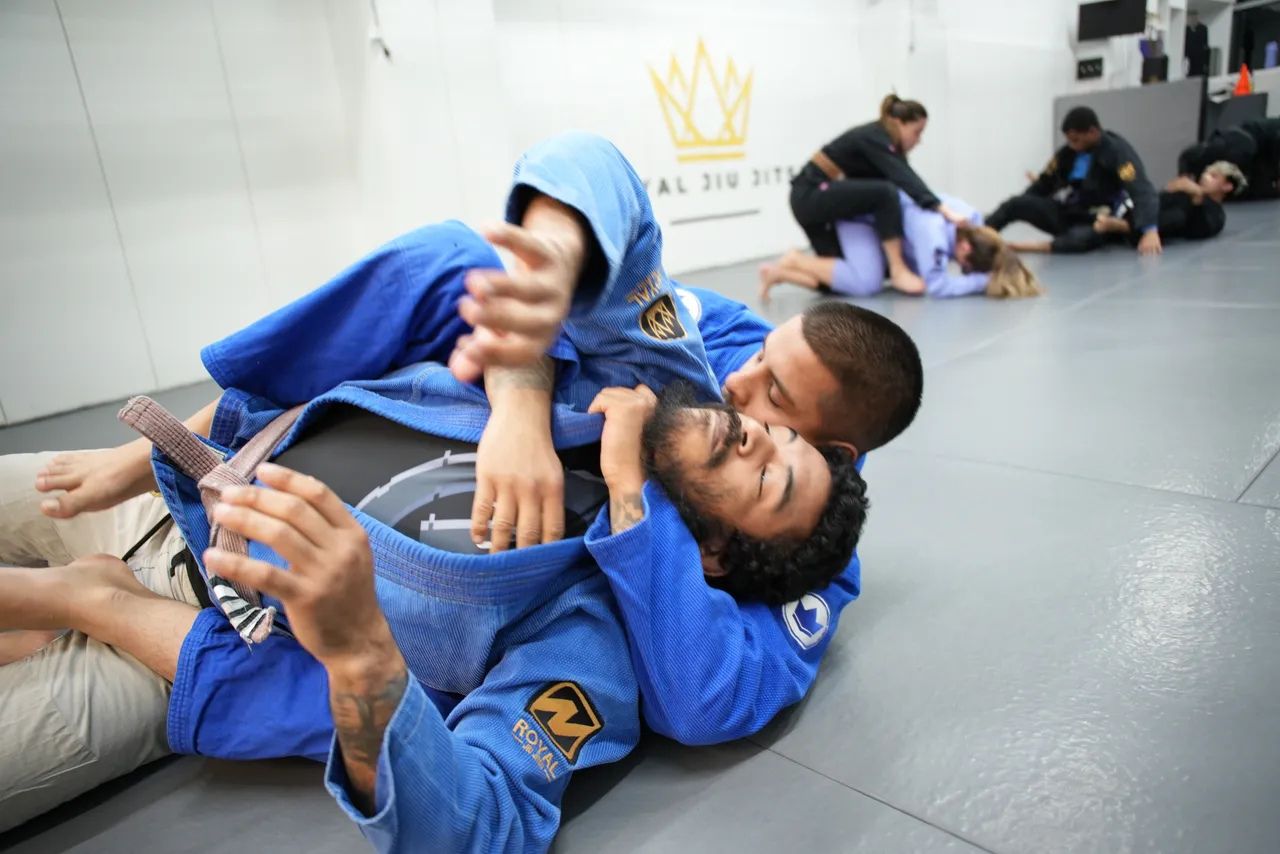
If your mind feels scattered and your body feels flat, the right training can reset both in a single class.
Queens runs fast. Between long commutes, packed calendars, and constant notifications, it is easy to feel like your attention gets pulled in ten directions at once. We meet a lot of adults who are not looking for another chore on the schedule. You want something that actually gives you more back than it takes.
That is one reason brazilian jiu jitsu has become such a powerful fit for Queens locals. It is physical, yes, but it is also deeply mental. You problem-solve in real time, you learn to stay calm under pressure, and you finish class feeling awake in a way that a coffee cannot quite match.
In this guide, we break down how brazilian jiu jitsu supports sharper focus and steadier energy, what you can expect in our adult training environment, and how to start in a way that feels realistic for your life in Queens.
Why brazilian jiu jitsu trains focus differently than workouts
A normal workout can be great for health, but it often lets your mind wander. You can lift, run, or cycle while thinking about email, errands, or tomorrow. On the mats, that habit does not really survive. You are interacting with a live partner who is moving, reacting, and trying to solve the same puzzle you are solving.
That is why people call brazilian jiu jitsu “human chess.” Your attention has to stay in the present moment. When your focus drifts, you feel it immediately because position changes quickly. Over time, you build the skill of paying attention on purpose, not only when it is convenient.
We also structure training so your brain has an honest job to do. Drilling is not mindless repetition. You are learning details like grips, frames, hip angles, and timing. That level of concentration carries over into daily life, especially for adults who spend their days in decision-heavy jobs.
The mental skill hiding inside every roll
In sparring, you are constantly choosing: Do you defend first, escape first, or re-guard? Do you slow down, or do you create a scramble? Those choices build a very practical kind of cognitive control. You learn to spot options and select the safest one under pressure.
That matters off the mats, too. A packed subway platform, a tense meeting, or a chaotic day at home all demand the same thing: clear thinking when things move quickly. Training gives you repeated reps of staying composed.
How training boosts energy without leaving you wrecked
A common fear is that martial arts will drain you. In reality, consistent training often does the opposite. Hard sessions trigger endorphin release, and regular practice can help stabilize stress hormones like cortisol. Many students notice their baseline energy improves, not just their fitness.
There is also a straightforward physical reason: cardiovascular endurance adapts. Early on, a few rounds can feel like a sprint. Then your body learns to recover faster between efforts. You stop burning all your fuel at once. You start finishing class sweaty but not destroyed, and you carry that “awake” feeling into the evening.
Intensity matters, too. During live rolling, you can burn around 500 calories in 30 minutes of hard sparring. That kind of output improves conditioning and supports weight management, but it also helps many adults sleep more deeply later. Better sleep shows up as better energy the next day, which sounds obvious, but it is huge.
The difference between tired and depleted
We aim for training that leaves you productively tired, not depleted. Technique-first coaching keeps you from muscling through everything. When you rely on leverage and positioning instead of brute force, you spend less energy fighting yourself.
This is especially important for adult beginners. You should not need to “get in shape” before starting. We build your conditioning gradually inside the skill work, and we keep the room supportive so you can learn at your pace.
Queens stress is real, and the mats are a mental reset
Queens is vibrant, crowded, and always moving. That is part of what makes it great, but it also means your nervous system rarely gets quiet. Training creates a rare pocket of single-tasking.
When you drill, your attention narrows to one goal. When you spar, you cannot multitask. That forced presence is a form of mindfulness that does not require sitting still or trying to empty your mind. You are simply too engaged to ruminate. For many adults, that is the relief.
We often hear the same pattern: someone comes in with a loud day in their head, and they leave with a calmer kind of mental silence. Not because problems disappear, but because your body learned how to downshift.
Community helps energy stick around
Energy is not only chemistry. It is also social. A welcoming room makes it easier to show up consistently, and consistency is where the focus and stamina benefits really stack up.
Our adult program is designed to be inclusive and practical. You train with people who have jobs, families, and responsibilities. The vibe matters. It is easier to push through a tough round when your partners want you to improve, not “win.”
What you actually do in our adult classes
People sometimes picture endless sparring or a room full of experts moving too fast to follow. Our approach is more structured than that. We teach fundamentals, build skill in layers, and then let you apply it safely.
Here is what a typical class includes:
• Technical instruction where we break down a position or sequence with clear “why” behind the details
• Drilling with a partner so you can build comfort, timing, and control without rushing
• Situational training from specific spots like side control, guard, or mount to sharpen decision-making
• Live rolling that is coached, optional for brand-new students at first, and scaled to your level
• Cooldown and quick reminders so you leave with something you can actually remember next time
This setup is one reason brazilian jiu jitsu in Queens works well for busy adults. You get the mental engagement of learning plus the physical output of training, without needing a two-hour block every day.
Why “human chess” improves your work focus in real life
Focus is not just concentration. It is also the ability to return to the task after distraction. On the mats, distraction is constant. A grip slips, a knee line changes, a partner shifts weight. You adapt, reset, and re-engage.
That cycle builds practical focus you can feel at work:
• You get better at prioritizing the next best step instead of freezing
• You become more comfortable with pressure and imperfect conditions
• You practice patience, because forcing moves usually backfires
• You learn to recover from mistakes fast, which protects your mental energy
Over time, that becomes a habit. You stop spiraling after a setback. You move on, solve the next problem, and keep your momentum.
Confidence is an energy multiplier
Confidence is not just a feeling. It changes how you spend energy. When you trust your ability to handle hard moments, you waste less mental fuel on worry.
Training builds confidence in small, honest increments. You escape a position that used to trap you. You remember the grip sequence without thinking. You survive a tough round and realize you are still okay. That steady progress translates to daily life in a very grounded way.
How often you need to train to feel benefits
You do not need to live at the gym to see results. For most adults, 2 to 3 sessions per week is enough to notice better mood, stress relief, and improved energy fairly quickly. Focus tends to sharpen as you accumulate reps and start recognizing patterns.
If your schedule is tight, consistency beats intensity. Two solid sessions every week will do more for your mind and body than one huge burst followed by a month off. We build our class schedule with adult routines in mind, so you can plug training into real life without it taking over.
A simple progression we recommend
1. Start with a realistic goal of two classes per week for your first month
2. Prioritize fundamentals and positional understanding over “winning”
3. Add a third class when recovery feels steady and your joints feel good
4. Track one small improvement each week, like breathing, guard retention, or escapes
5. Revisit your routine every 6 to 8 weeks and adjust based on energy and stress
This is how brazilian jiu jitsu classes for adults stay sustainable. You build momentum, not burnout.
Beginner concerns we hear all the time (and how we handle them)
Starting something new as an adult is a little vulnerable. We get it. Here are a few concerns we plan for in our coaching.
“I am not in shape.”
You do not need to be. We scale intensity, emphasize technique, and help you build conditioning through the training itself. Your fitness improves as a byproduct of learning.
“I do not want to get hurt.”
Safety is a real priority. We teach control, we encourage tapping early, and we guide partner selection so new students are not thrown into chaotic rounds. The goal is longevity.
“I am worried I will be lost.”
We teach in layers and repeat key positions often. You will not memorize everything in a week, and you do not have to. You just need steady exposure, and we keep the environment supportive.
“Will this actually help my focus?”
Yes, because focus is trained, not wished for. Every drill and every round requires attention, problem-solving, and calm under pressure. Those are transferable skills, and you feel the difference when you go back to your day.
Take the Next Step
Building focus and energy is not about finding more motivation. It is about creating a weekly practice that trains your attention, improves your conditioning, and gives your nervous system a reset. That is exactly what we see happen when adults commit to consistent brazilian jiu jitsu training, especially in a fast-paced place like Queens.
When you are ready to experience it firsthand, we would love to welcome you at Royal Jiu-Jitsu Queens. Our classes are built for adult beginners and experienced students alike, with a clear structure that supports real progress without the ego or confusion.
Turn what you learned here into hands-on training by joining a Brazilian Jiu-Jitsu class at Royal Jiu-Jitsu Queens.