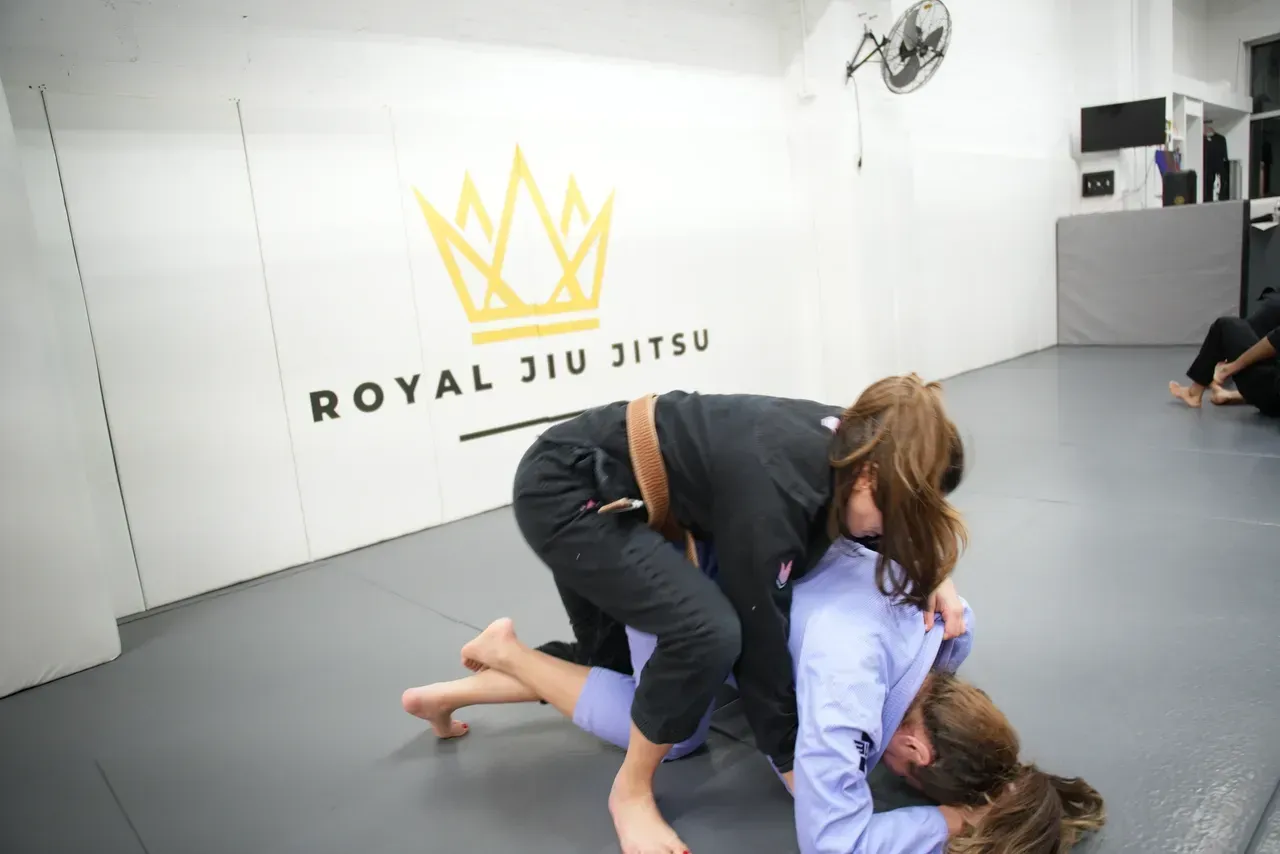
Your goals get easier to hit when your training plan is realistic, measurable, and built for life in Queens.
Brazilian jiu jitsu is growing fast for a reason: it gives you a full-body workout, real problem-solving under pressure, and a skill you can keep improving for years. Worldwide, the sport has reached roughly 5.0 million practitioners across 180 countries, with annual growth around 8.5 percent, and that momentum shows up locally in Queens, too. When you walk into class with a clear target, progress stops feeling random and starts feeling earned.
We also know Queens schedules can be a little chaotic. You might be juggling work, school, long commutes, family responsibilities, or all of the above. That is exactly why goal-setting matters in BJJ in Queens: it helps you train consistently without burning out, and it keeps you motivated when you hit those inevitable plateaus.
In this guide, we are going to show you how we help you set meaningful brazilian jiu jitsu goals, map them to real training behaviors, and track them in a way that fits your lifestyle. You will get a practical framework you can use right away, whether you want better fitness, self-defense confidence, or your first competition.
Why goal-setting matters in brazilian jiu jitsu in Queens
Queens is packed with motivated people. That can be energizing, but it also leads to one common mistake: setting goals that are inspiring, but not structured. “Get in shape” and “learn to fight” sound good, yet they do not tell you what to do on Tuesday night when you are tired and deciding whether to train.
A strong goal works like a compass. It tells you what to prioritize in class, what to drill at open mat, how often to train, and how to measure progress without obsessing over every roll. That last part matters because brazilian jiu jitsu is a long game. On average, it takes about 2.3 years to go from white to blue belt, about 5.6 years to purple, and around 13.3 years to black belt. Those timelines are not meant to intimidate you. They are meant to help you plan like an adult, not like someone trying to cram for a test the night before.
And yes, the Queens competitive scene is real. With IBJJF events in the area, plenty of students feel the pull toward competition at some point. Goals help you decide if you want that path now, later, or not at all, and all three options are valid.
Start with the goal behind the goal
Most people walk in asking for a surface-level outcome: lose weight, get stronger, learn submissions, feel safer. We love those goals, but we also ask one more question: what is the deeper reason you want it?
That deeper reason is what keeps you consistent when progress feels slow. For some students, it is stress relief after a long day. For others, it is building confidence, especially for women who want practical self-defense skills in a controlled, respectful environment. Female participation in BJJ continues to rise, driven by inclusivity and the self-defense value of leverage-based techniques, and we see that shift showing up in class culture in a really positive way.
Your “why” does not need to be dramatic. It just needs to be true. Once you have it, you can build goals that actually stick.
Use the SMART framework, but keep it human
SMART goals are specific, measurable, achievable, relevant, and time-bound. That sounds a little formal, but it works beautifully for BJJ in Queens because it translates motivation into a calendar and a checklist.
Here is what SMART looks like for brazilian jiu jitsu:
• Specific: “I will improve my guard retention” is better than “I will get better at jiu jitsu.”
• Measurable: “I will successfully recover guard at least three times per round” gives you something you can count.
• Achievable: Set a target that fits your training frequency and your current level.
• Relevant: Pick a skill that matches your body type, confidence level, and goals (self-defense, sport, fitness).
• Time-bound: Give it a time window like four weeks, eight weeks, or one training cycle.
We recommend setting one technique goal, one fitness goal, and one consistency goal at the same time. Any more than that and you end up chasing everything, which usually means catching nothing.
How often should you train to see results in Queens
For beginners, the sweet spot is usually two to three sessions per week. That frequency is enough to build skill and conditioning without overwhelming your recovery. It also lines up with what we see in real life: people who aim for two to three classes weekly tend to stay consistent longer, and consistency is what makes the techniques start to feel natural.
If you can only make it once a week, we can still help you improve, but your goals need to match that reality. If you train four to six times a week, that can be great too, but we will want you to pay attention to sleep, mobility, and the small aches that pop up, because injury risk in BJJ is not trivial. Research shows 59.2 percent of athletes reported an injury in the prior six months, with novices seeing higher injury rates in training. The goal is not to fear training, it is to train intelligently.
A simple 6-week goal plan we use in our classes
You do not need a complicated spreadsheet to progress in brazilian jiu jitsu in Queens. You need a short cycle you can repeat, adjust, and learn from. Here is a six-week approach that fits most schedules:
1. Choose one position to study, like closed guard, side control, or half guard.
2. Pick one primary technique and one backup option from that position.
3. Train two to three times per week, with one class focused on drilling details, not just rolling hard.
4. Track one metric after each class, such as escapes completed, guard recoveries, or times you achieved the position.
5. Add one small conditioning habit, like two short walks per week or basic strength work.
6. Review at week six and set the next cycle goal based on what you learned.
This keeps your training focused without turning it into homework. It also gives you momentum, because every six weeks you can point to something that improved.
Gear, first class nerves, and keeping it simple
A lot of people hesitate because they think they need to buy everything upfront. You do not. For your first class, you can show up in comfortable athletic wear, and we will guide you from there. If you decide to train in the gi, we can help you choose one that fits correctly. For no-gi, rash guards and grappling shorts are typical, and we can point you toward what works best for durability and comfort.
Your first day will feel like learning a new language with your body. That is normal. Our job is to make the learning curve manageable by teaching a few core movements, explaining why they matter, and pairing you with training partners who understand how to keep things controlled.
Belt goals without the frustration
Belts matter, but they work best as long-term markers, not daily scorecards. If you base your motivation on promotion timelines alone, you risk feeling behind even when you are improving fast in the areas that actually count, like balance, breathing, and decision-making.
We like belt goals, but we frame them as “process goals.” If your long-term target is blue belt, the weekly goal might be showing up consistently, learning how to tap early, and developing two reliable escapes from bad positions. Those are the habits that earn promotions and keep your body healthy enough to train for years.
A practical benchmark: if the average white-to-blue timeline is about 2.3 years, you can break that into quarters. Over the next three months, maybe your focus is survival and escapes. The next quarter, you add guard passing. The next, you build a submission chain. Suddenly, the long timeline feels doable.
Goals for self-defense, not just sport
Queens is diverse, busy, and fast-moving. Self-defense goals should reflect that reality. We teach you how to control distance, manage grips, get to safer positions, and stay calm while someone resists. The calm part is underrated, by the way. When you have practiced problem-solving under pressure in class, daily stress outside the gym often feels more manageable.
Self-defense goals can be very concrete:
- Learn how to stand up safely from guard
- Build a reliable clinch entry and breakaway
- Develop confidence escaping common pins
- Improve situational awareness and posture
Because brazilian jiu jitsu is leverage-based, it is also a strong option for beginners and for women who want practical skills without relying on size or strength alone. The technique is the equalizer, but only if you practice it consistently.
Competition goals for BJJ in Queens
If you want to compete, we will help you treat it like a project, not a personality. Competing can sharpen your training, give you a clear deadline, and teach you a lot about nerves and preparation. Queens being close to major events, including IBJJF competitions, makes it easier to plan a season if that is your thing.
A smart competition goal is not “win gold.” It is “execute my game plan.” For example, your goal might be to pull to your best guard, attempt your preferred sweep, and maintain top position with control. If you do that, the outcome often follows.
We also build competition goals around safety. Advanced athletes see higher injury rates in competition settings, so we prioritize a training ramp-up that respects recovery. You should feel sharp on event day, not worn down and patched together.
Tracking progress without overthinking it
You do not need to remember every detail of every roll. You just need a simple system. Some students use a notes app. Others keep a small notebook in their bag. We like any method that takes less than two minutes after class.
Track:
- What position you focused on
- One thing that worked
- One thing that did not
- One question you want to ask next class
That is it. After a month, patterns show up. You will see which guards you keep losing, which escapes are improving, and what you should drill more. This is how you turn random training into intentional improvement.
Staying consistent in Queens: the real secret
Motivation comes and goes. Consistency is built through routine and community. When you know what days you train, and your training partners expect to see you, it is easier to show up even when you are tired.
We encourage you to check the class schedule and choose two or three “default” training times each week. Treat them like appointments. If you miss one, you do not spiral. You just make the next one. Over time, those small choices add up to real change: better cardio, stronger posture, more confidence, and sharper technique.
And if you ever feel stuck, that is not failure, it is feedback. We adjust goals all the time based on what your body is telling you and what your game needs next.
Take the Next Step
Clear goals make training feel purposeful, and purposeful training is what helps you stay consistent long enough to see real transformation. At Royal Jiu-Jitsu Queens, we help you turn big intentions into practical weekly targets, whether you are focused on fitness, self-defense, or leveling up your skills in BJJ in Queens.
If you are ready to start, we will meet you where you are, help you pick the right pace, and keep your progress measurable without making training feel like a chore. That balance is where most people thrive, and it is exactly what we aim for every day at Royal Jiu-Jitsu Queens.
Put these techniques into practice by joining a Brazilian Jiu-Jitsu class at Royal Jiu-Jitsu Queens.