When your day feels loud, training can be the one place your mind finally gets quiet.
Queens moves fast. Between commutes, packed schedules, family obligations, and screens that never stop buzzing, stress can feel like background noise you just learn to live with. We see it every week: adults who are capable, hardworking, and mentally exhausted, looking for something that does more than “burn calories.”
This is where brazilian jiu jitsu fits differently than most workouts. It is physical, yes, but it is also intensely present-focused. When you are learning how to breathe under pressure, solve problems in real time, and stay calm while your body works hard, your brain gets a break from everything else. That combination is why so many people start training for fitness or self-defense and stay for the stress relief.
In our Queens programs, we build that calm intentionally. We keep the room structured, supportive, and beginner-friendly, because stress relief only happens when you feel safe enough to learn.
Why brazilian jiu jitsu calms the nervous system in a way cardio alone usually cannot
A treadmill can be useful, but it often leaves your mind free to replay the same worries. brazilian jiu jitsu is different because it demands full attention. You cannot scroll your thoughts while someone is passing your guard. You have to be here, now, and that “now” becomes a kind of active meditation.
From a brain and body standpoint, training can support stress relief in a few overlapping ways. Intense, skill-based exercise is associated with the release of endorphins and mood-related neurotransmitters like dopamine and serotonin, which are often linked to reduced anxiety and improved emotional balance. Add in the focus requirement, and you get a powerful reset: physical output plus mental stillness.
We also like how honest the feedback is. If you tense up, you gas out. If you hold your breath, you panic faster. If you learn to relax and frame properly, you create space. Over time, that lesson transfers off the mat in a surprisingly practical way.
The “active meditation” effect: why your mind stops racing when you roll
Most adults in Queens are not lacking motivation. You are usually lacking recovery. The mind has to downshift sometimes, or it starts living in a constant low-level alarm state. One reason brazilian jiu jitsu helps is that it gives your attention a single job: solve the problem in front of you.
Rolling is often called “human chess” for a reason. You are tracking grips, angles, timing, balance, pressure, and posture. That level of engagement tends to pull you out of the past and out of the future. You cannot rehearse tomorrow’s meeting while defending a guard pass.
We coach this deliberately. When a student is overwhelmed, we narrow the focus: one escape, one breath cue, one simple goal for the round. That is not just good learning design. It is also how you build calm, piece by piece, until it becomes your default.
Stress chemistry, explained in plain English
Stress is not only “in your head.” It is in the body. When your system stays revved up for too long, sleep gets worse, patience gets thinner, and small problems start feeling heavy. Training can help because it gives the body a controlled, healthy stressor, then teaches it to recover.
In a typical session, you warm up, drill, and roll. Your heart rate rises, you sweat, you work. Then you come down. That rise-and-fall matters. Done consistently, it can help regulate the nervous system, especially when paired with steady routines, good hydration, and sleep.
And there is another layer that is easy to miss: you get practice being uncomfortable without being unsafe. That matters for anxiety. You learn that pressure is information, not an emergency.
Why controlled discomfort builds resilience and confidence
In our adult classes, we do not chase chaos. We build skill progressively so you can handle pressure without feeling thrown into the deep end. Still, part of the magic of brazilian jiu jitsu is that you eventually face real resistance. The techniques have to work against someone who does not want them to work.
That is where confidence becomes real. Not hype, not affirmations, but earned confidence. You start to trust your problem-solving. You learn you can breathe, think, and keep moving even when you are tired. That sense of “I can handle this” tends to show up later at work, on the subway, and in everyday conflict.
Research has also started to catch up to what long-time practitioners have felt for years. Studies and reviews have pointed toward improvements in markers related to PTSD, anxiety, depression, and resilience, with the social connection and controlled exposure elements playing a role. We do not position training as therapy, but we absolutely respect that it can be deeply therapeutic.
What a stress-relief focused class feels like in Queens
A calm gym is not quiet. It is structured. You will hear movement, instruction, a little laughter, and the thump of grappling, but the vibe should feel grounded, not chaotic.
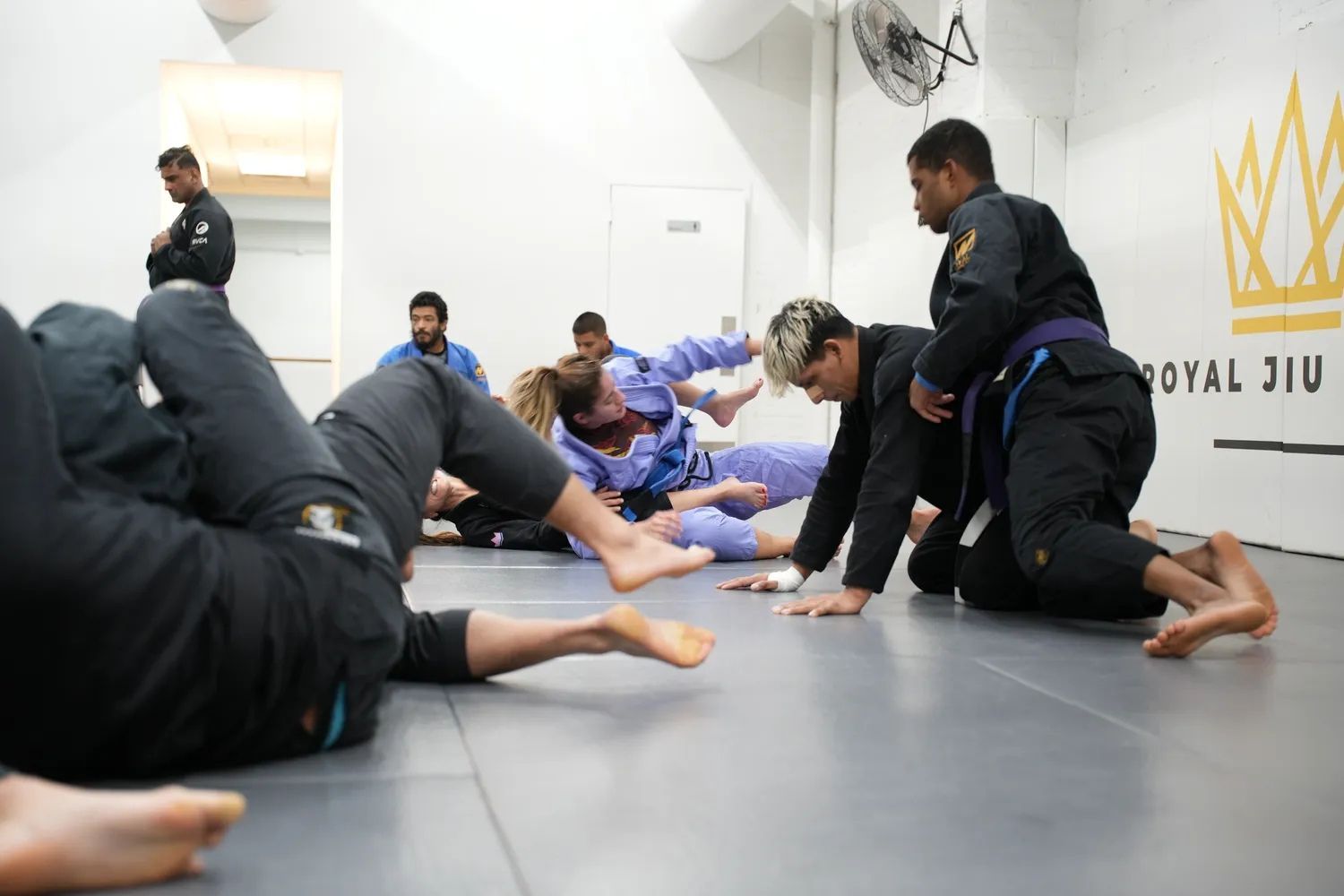
A typical class for adults is usually 45 to 60 minutes. We start with a warm-up that prepares the joints and gets your breathing going. Then we teach technique in a way that makes sense even if you are brand new. After that, drilling turns the technique into something your body can actually remember. Rolling is optional for brand-new students, and when you do roll, we guide you on how to choose partners and set intensity.
What surprises many beginners is how calm they feel afterward. You get that “post-training quiet” where the brain feels washed out, like you finally closed 20 open tabs.
Common Queens questions we hear (and our straight answers)
How does BJJ reduce stress compared to lifting or group fitness?
Because you cannot half-focus. brazilian jiu jitsu pulls you fully into the present, which creates that mindfulness effect many adults are chasing. You also get social connection and skill progression, not just fatigue.
Is this realistic for adult beginners who feel anxious?
Yes, and we take that seriously. We introduce intensity gradually, teach etiquette clearly, and keep the learning environment respectful. You will not be expected to “prove yourself” on day one.
Can it help with work stress or trauma history?
Many students report major improvements in mood, sleep, and confidence with consistent training, and research has suggested benefits for PTSD-related symptoms in certain groups. If you have a clinical condition, we recommend training alongside professional care, but we can absolutely be part of a healthy routine.
How often should I train for mental benefits?
Most adults do well with 2 to 3 sessions per week. It is enough to build a rhythm without turning training into another stressor.
Simple techniques we teach that create immediate calm
You do not need a complicated mindset routine. Small physical habits during training can change how you experience stress.
Here are a few stress-reducing cues we coach early:
• Breathe through your nose whenever possible, especially while defending, because it slows the pace and reduces panic breathing.
• Relax your hands and shoulders between transitions, since gripping too hard spikes fatigue and stress quickly.
• Use frames before strength, because structure gives you space and space gives you calm.
• Focus on one goal per round, like “recover guard” or “get to half guard,” so your mind stays organized.
• Tap early and reset without judgment, because safety and learning come first, always.
These are mat skills, but they become life skills. You learn to stop fighting the moment and start managing it.
A realistic timeline: when you start feeling better
Stress relief is often immediate after class, but the deeper changes build over weeks. With regular attendance, many adults notice improved sleep, steadier mood, and better focus within about 4 to 6 weeks. That is not magic. It is routine, movement, and community working together.
We also encourage small “between-class” habits that make the benefits stick. A short walk after training, a protein-focused meal, and even a quick note in your phone about what you learned can help your brain file the experience as progress, not just exertion.
Consistency matters more than intensity. If you train hard once a week and then disappear, you will still feel better, but you will not build the same baseline calm as someone who shows up twice a week and keeps it sustainable.
What to expect if you are brand new (and a little nervous)
Most adults are worried about two things: looking awkward and getting hurt. Both are normal concerns, and we plan for them.
We keep our beginner process clear. You will learn how to fall safely, how to tap, how to move with control, and how to communicate with partners. We set expectations around hygiene, nails, and gear, because a clean, respectful room is part of feeling safe. And we teach you how to choose intensity. Not every round has to be a war.
You also do not need to be “in shape” to start. Training is how you get in shape. We adjust pace, partner pairings, and goals so you can build fitness without feeling punished.
Why community matters for stress relief in a borough like Queens
Queens is diverse, busy, and packed with people, yet it can still feel oddly isolating. Adult life does that. One underrated benefit of brazilian jiu jitsu is that it gives you a real community ritual: show up, learn, train, reset.
You start recognizing familiar faces. You build trust through safe, controlled practice. You get a place where your job title does not matter and your inbox cannot reach you. That social grounding is a big part of why people keep coming back, especially post-pandemic, when anxiety and disconnection have been high for a lot of adults.
And yes, there is something nice about stepping off the street, onto the mat, and letting the day drop for an hour.
How to train for calm without turning training into another obligation
Stress relief only works if the routine supports your life instead of crowding it. We recommend a simple plan:
1. Pick two consistent days per week from the class schedule and protect them like appointments.
2. Start with fundamentals and positional sparring so you learn to stay calm in controlled scenarios.
3. Increase intensity slowly, because confidence grows faster when you feel safe.
4. Track one small win per class, like “escaped side control once,” to keep progress tangible.
5. Add a third day only when your body and schedule feel ready, not when guilt pushes you.
That approach keeps training sustainable for adults with real responsibilities, which is most people in Queens.
Ready to Begin
Building calm is not about avoiding pressure. It is about learning how to meet pressure with better tools, better breathing, and a steadier mind. That is what we aim to teach every day, and it is why so many adults find that training becomes the healthiest part of their week.
If you want a place to practice brazilian jiu jitsu in a way that supports stress relief, confidence, and real skill development, we would love to have you on the mat at Royal Jiu-Jitsu Queens. Our programs are designed for beginners and experienced grapplers alike, and our brazilian jiu jitsu classes for adults fit the reality of Queens schedules.
Strengthen both your body and mindset through consistent Brazilian Jiu-Jitsu training at Royal Jiu-Jitsu Queens.