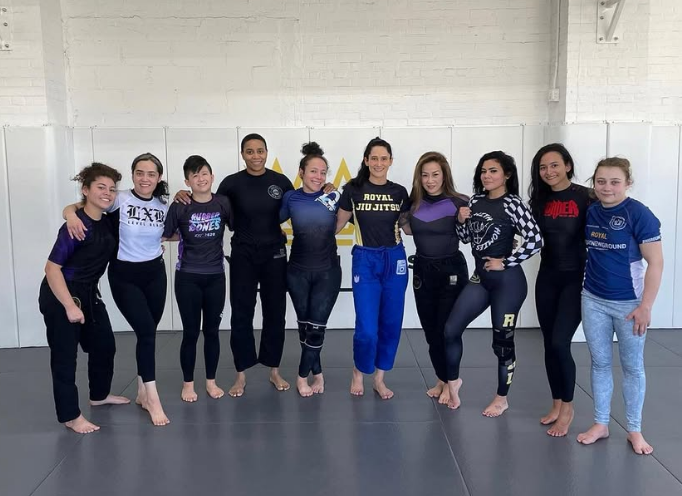
A great youth program is not just about learning moves, it is about building calm confidence in everyday life.
If you are considering Youth Brazilian Jiu Jitsu for your child in Queens, you are probably weighing a few big questions at once. Will my child actually enjoy it, or will it feel like another after-school obligation? Will it help with confidence, focus, and handling pressure, or is it only useful for kids who want to compete?
We work with Queens families every week who want something structured, positive, and practical. Youth Brazilian Jiu Jitsu has a reputation for building real skills without relying on strikes, and that matters to many parents. It is also one of the fastest-growing martial arts in the United States, with search interest up more than 104.35 percent from 2004 to 2024, which lines up with what we see locally: more kids want a sport that feels like problem-solving, not just exercise.
At the same time, we take the conversation seriously, including safety. Pediatric injury data shows a statistically significant upward trend in Brazilian Jiu Jitsu injuries from 2012 to 2021, and the most common diagnoses are sprains and strains at 28.3 percent, followed by fractures at 20.1 percent. The good news is that most injuries are treated without hospital admission, and smart coaching habits reduce risk dramatically. Our job is to help you understand both the upside and the responsibilities so you can decide with confidence.
Why Youth Brazilian Jiu Jitsu is growing so quickly
Brazilian Jiu Jitsu is no longer a niche activity you stumble across by accident. The broader market tells the story. The global Brazilian Jiu Jitsu Gi market reached 353.6 million dollars in 2024 and is projected to grow at a 7.1 percent CAGR through 2033. That kind of equipment growth usually follows one thing: more structured programs, more consistent participation, and more families buying gear because training becomes part of weekly life.
In the U.S., the Brazilian Jiu Jitsu studios industry generated an estimated 2.5 billion dollars in revenue in 2024 and includes 44,218 businesses. We mention those numbers for a simple reason: when an activity expands, the conversation shifts from novelty to quality. Families start asking better questions about coaching, safety systems, and what kids actually learn over time.
We also see a demographic shift in martial arts overall. Families want training that supports mental well-being and longevity. Grappling arts are often viewed as lower-impact than striking-heavy programs, and the mental stimulation of solving positions and escapes is a big part of why kids stick with it.
What kids actually learn in Brazilian Jiu Jitsu classes for youth
Parents often come in thinking their child will learn a few self-defense moves. That happens, but it is only part of the picture. In Brazilian Jiu Jitsu classes for youth, we focus on teaching kids how to think and act under pressure in a controlled setting. That is a life skill, not just a sport skill.
A 2024 study looking at BJJ and life skills found that parents observed significant life skill development in children practicing BJJ. The same study reported that adult practitioners experienced 87.6 percent improved confidence, 87.5 percent reduced anxiety, and 96.9 percent improved mood. Kids do not always describe those changes in those exact words, but you can often see it: calmer decision-making, more willingness to try hard things, and a better ability to reset after mistakes.
Core life skills we reinforce on the mats
- Emotional regulation when something does not go your way, because positions change fast and frustration is normal
- Respectful communication with coaches and teammates, including listening, asking questions, and accepting feedback
- Persistence through incremental progress, since techniques improve in small steps rather than overnight
- Problem-solving under pressure, because grappling is basically a moving chess match with real consequences
- Healthy confidence built on practice, not hype, so kids feel capable without becoming reckless
These benefits feel especially relevant in Queens, where school schedules are busy and kids juggle a lot. A consistent training routine can become a steady anchor during a chaotic week.
Is Youth Brazilian Jiu Jitsu safe for kids in Queens?
Safety is the question we expect, and it is the right one to ask. BJJ is a contact sport. That means you cannot promise zero risk, and we will not pretend otherwise. What we can do is control the training environment, coach smart, and build skills progressively so kids are not thrown into situations they cannot handle.
The pediatric injury data is useful because it points to what we should prevent. In the 2012 to 2021 data, sprains and strains account for 28.3 percent of pediatric injuries, and fractures account for 20.1 percent. The most injured body parts reported include the head at 14.2 percent, shoulder at 9.8 percent, and lower arm at 8.9 percent. Most injuries are treated in emergency departments without admission, which suggests many cases are manageable, but still disruptive for a family.
How we reduce risk through coaching and structure
We emphasize controlled training, especially during partner drills and sparring. Kids learn how to fall, how to post safely, and how to stop when a position is compromised. We also build a culture where tapping early is normal and encouraged, not something a child feels embarrassed about. That single habit prevents a lot of problems.
We also match training partners thoughtfully. Size, age, and experience matter. A well-run class does not feel like chaos. It feels organized, even if the kids are laughing between rounds and adjusting their belts for the tenth time.
If you are a parent, you can support safety too. Keep nails trimmed, make sure your child is hydrated, and let us know about prior injuries or hypermobility. Small details add up.
What a typical youth class feels like, from warm-up to sparring
Parents sometimes picture a room full of kids wrestling with no structure. A good youth class is the opposite. Our classes follow a consistent rhythm so kids know what to expect, which helps anxious or shy students settle in.
Most sessions include a warm-up that builds coordination and safe movement patterns. Then we teach a technique or a small sequence, usually tied to a theme for the week, like controlling posture, escaping pins, or maintaining balance. After that, kids practice with a partner in a supervised way, and then we add sparring in an age-appropriate format.
We adjust intensity based on the group. Some days are high-energy. Other days are more technical and focused. Over time, kids learn that both modes are part of training and both matter.
The best age to start and what progress looks like
Many Queens parents ask about the best age to start Youth Brazilian Jiu Jitsu. In practice, the best time is when your child can follow basic instructions, participate in a group setting, and handle light partner contact without panicking. Some kids are ready earlier, some later, and that is completely normal.
Progress in BJJ is not linear. One week your child might feel unstoppable because a technique clicks. The next week might feel harder because classmates improve too, or because a new position is introduced. We coach kids to treat that as part of the process, not a sign something is wrong.
A simple progression we often see
1. Comfort and basics: learning how to move safely, hold positions, and follow the class structure
2. Early confidence: using one or two favorite techniques successfully with peers
3. Real problem-solving: reacting instead of freezing when a plan fails
4. Composure under pressure: staying calm during sparring and making better decisions
5. Leadership: helping newer students, setting a strong example, and training with consistency
This is also where parents start noticing changes outside the gym: better posture, more patience, and a stronger sense of responsibility.
Do kids have to compete for Brazilian Jiu Jitsu in Queens to be worthwhile?
No. Competition is optional. Some kids love it, and it can be a great way to set goals. But many families come to us for the everyday benefits: fitness, discipline, and confidence that feels earned. The sport has grown partly because more families treat it as a long-term activity, not just a competitive pipeline.
If your child does want to compete, we can guide that path in a structured way. If your child does not, we still train with purpose. The goal is skill development and character development, and both are valuable whether or not medals are involved.
What to look for when you check the program details and class schedule
When you visit the website and review the program details, you want to see clarity. You should be able to understand the age group options, the class schedule, and what a new student needs to bring. You should also see signals that the program is organized and safe: structured classes, supervision, and clear expectations for behavior.
Equipment is usually straightforward. A gi is the main item, and the growth in the gi market suggests families have more standardized, affordable options than ever. If you are not sure what to buy, we can point you in the right direction so you do not overthink it.
Most importantly, you should feel that your child will be coached, not just managed. Kids can tell the difference quickly.
Take the Next Step
Choosing Youth Brazilian Jiu Jitsu is really about choosing an environment where your child can build confidence, body awareness, and resilience one class at a time. If you are looking for Brazilian Jiu Jitsu classes for youth that balance structure with a welcoming vibe, we have built our program around steady progress and safety-first coaching in Queens.
At Royal Jiu-Jitsu Queens, we keep the training practical, supervised, and positive so your child can learn real skills while enjoying the process. When you are ready, we would love to help you explore what a great first month can look like and how it fits into your family routine.
Become part of a team committed to growth, respect, and continuous improvement at Royal Jiu-Jitsu Queens.