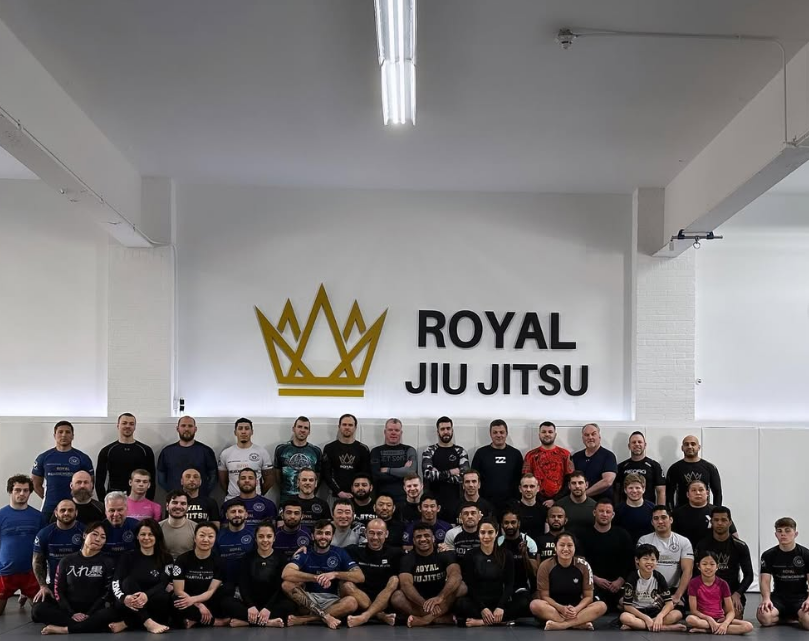
Brazilian jiu jitsu turns strangers into training partners, and training partners into the kind of community Queens is famous for.
Queens moves fast, and it can feel like everyone is rushing past everyone else. That is one reason so many locals end up looking for Brazilian jiu jitsu: you get a real workout, you learn something practical, and you also find a place where people actually notice when you show up. In our classes, belonging is not a marketing line. It is a byproduct of doing hard things together, week after week.
Brazilian jiu jitsu is also uniquely suited to New York life because it rewards consistency more than intensity. You do not need to arrive as an athlete to make progress. You need a plan, a steady schedule, and training partners who want you to improve safely. That mix is how a room full of different ages, backgrounds, and neighborhoods starts to feel like a team.
And the numbers behind the art make the community side even more meaningful. A large 2024 to 2025 survey of nearly 2,000 practitioners found the average timeline is about 2.3 years to blue belt, 5.6 years to purple, 9.0 years to brown, and 13.3 years to black belt. That kind of long runway changes how people treat each other. When you realize you are building something that takes years, you stop thinking like a drop-in customer and start thinking like a teammate.
Why Brazilian Jiu Jitsu Naturally Creates Belonging in Queens
Queens is diverse in a way that is hard to explain until you live here. People speak different languages on the same block, work different shifts, and carry different stress. On the mats, the common language becomes simple: posture, frames, timing, and breathing. You can have very little in common on paper and still work together toward the same goal, which is improving one rep at a time.
Belonging also comes from structure. The belt system gives you shared milestones, and those milestones matter because they are earned. When someone hits a first clean guard recovery or survives a round without panicking, we all see it. It is hard not to root for that.
There is also a practical reason community forms quickly in BJJ in Queens: you cannot learn alone. Drilling and sparring require trust and communication. You learn how to be a good partner, how to give useful resistance, and how to keep each other safe. Those habits tend to follow you off the mat, too, into friendships, accountability, and that subtle feeling of being recognized in a crowded city.
The Mat Is a Social Space, Not Just a Workout
Most gyms in the city are built for headphones and solitude. Our room is different by necessity. You are paired up, you rotate partners, you ask questions, you reset, and you try again. Even if you are naturally quiet, you end up talking, because you need to. It is normal to hear a quick, helpful exchange like, “Your grip is strong, but shift your hips first,” and then watch the technique click.
This kind of shared learning has an unexpected effect: it makes progress feel communal. Your improvement is tied to someone else giving you the right look, the right reaction, and the right level of challenge. And in return, you become part of someone else’s learning curve. That reciprocity is one of the cleanest definitions of community we know.
What “Belonging” Looks Like in Day-to-Day Training
Belonging is not only about being friendly. In Brazilian jiu jitsu, it shows up in practical habits we build into the training culture:
• You get greeted and introduced, so you are not left scanning the room wondering where to stand.
• You rotate partners, which helps you connect across skill levels instead of staying in one comfort zone.
• You learn names and styles over time, which makes the room feel familiar even on a tough day.
• You get coaching in real time, not just at the front of the room, so you feel guided rather than judged.
• You see consistent faces on a consistent schedule, which quietly turns attendance into accountability.
That is how “community” stops being abstract and becomes something you can feel when you step onto the mats.
Brazilian Jiu Jitsu Classes for Adults: Why Queens Professionals Stick With It
Adults in Queens juggle a lot: commutes, family responsibilities, long hours, and the mental load of city life. That is why we design our brazilian jiu jitsu classes for adults to be structured, scalable, and worth your time. You can show up as a complete beginner and still get a clear roadmap: what to work on, what to avoid, and how to measure progress without guessing.
The physical benefits are real, too. The American Council on Exercise notes that BJJ provides full-body fitness, improving cardiovascular health and building functional strength, while burning hundreds of calories per class. But adults often tell us the bigger change is mental. Training forces you to focus on one task at a time. Your phone is not part of the round. Your inbox cannot follow you into a scramble.
And because the belt path is long, you can stay in this for years without “finishing” it. That matters in Queens, where plenty of fitness routines burn out fast. When you train Brazilian jiu jitsu with a community around you, the habit sticks.
A Queens-Specific Kind of Confidence: Calm Under Pressure
Self-defense is a common reason people start, and we take that seriously. But the confidence you build in BJJ in Queens is often quieter than people expect. It is the confidence of knowing you can stay calm when something is uncomfortable, whether that is a heavy top position in sparring or a stressful day on the train.
We teach you how to solve problems with technique, leverage, and positioning. That approach is especially useful for beginners who worry about athleticism. The art is designed to help smaller or less explosive people work effectively by making better choices. Over time, you stop relying on panic and start relying on decisions.
Queens also has its own set of daily pressures: tight sidewalks, crowded spaces, and a constant sense of motion. Training gives you a physical outlet, but it also teaches you to breathe, assess, and respond. That is a life skill, not just a sport skill.
The Long Belt Journey Builds Long-Term Relationships
The belt timeline is one of the most overlooked community engines in Brazilian jiu jitsu. When the average black belt takes roughly 13.3 years, you do not build relationships in weeks, you build them in seasons of life. People see each other through job changes, family changes, and all the ups and downs that come with living in New York.
Belts also create mentorship without forcing it. Higher belts help newer students because someone once helped us, too, and because explaining technique makes our own understanding sharper. Newer students keep higher belts honest by asking simple questions that expose gaps. It is a healthy loop.
And because promotions are earned, shared milestones feel genuine. You remember who helped you prepare for a first competition, who stayed after class to drill a guard pass, or who reminded you to slow down and protect your neck. Those are small moments, but they add up quickly.
How We Keep Training Safe While Still Challenging
BJJ is a contact sport, and we do not pretend otherwise. A 2024 to 2025 survey reported that 59.2 percent of athletes experienced at least one injury in the prior six months, with higher training frequency increasing risk, while experience tended to reduce it. That data matters because it reminds us to train with intention, not ego.
Our goal is to help you train for years, not just for a few intense months. Safety is part of community, because a room full of sidelined people is not a thriving team.
Practical Injury-Prevention Habits We Teach From Day One
We keep prevention realistic, not preachy. These habits help most beginners stay consistent:
1. Tap early and tap clearly, especially during joint locks and tight chokes.
2. Prioritize technique over speed when you are learning new movements.
3. Choose controlled rounds before you choose “win the round” rounds.
4. Build a schedule you can recover from, often 2 to 3 classes per week for beginners.
5. Ask questions when something feels off, because small adjustments prevent big problems.
Training smart is not a sign you are timid. It is a sign you want to be here long enough to get good.
Community Beyond the Mats: Events, Consistency, and Queens Pride
Community is not only what happens in class. It is also what happens because you showed up consistently and became part of the rhythm. People start coordinating training days, sharing tips about stretching, and checking in when someone misses a week. That is a big deal in a borough where it is easy to feel anonymous.
Queens is also close to a very active competitive scene. New York tournaments regularly draw hundreds of competitors across divisions, reflecting how alive the sport is locally. Not everyone wants to compete, and you do not need competition to belong. But it helps to know the option exists, and that a clear pathway is there if you want a goal that sharpens your training.
Whether your goal is fitness, self-defense, stress relief, or a challenging hobby that does not feel repetitive, BJJ in Queens has a way of pulling people into a shared identity. You are not just “someone who works out.” You are a teammate. Over time, that becomes part of how you see yourself.
What to Expect in Your First Class
Starting anything new in New York can feel like you have to prove you belong before you even walk in. We do the opposite. Our job is to make your first day clear and comfortable so you can focus on learning.
Wear comfortable athletic clothing to start. If you are training in the gi, we will guide you on what to bring or how to get set up. If you are training no-gi, a rash guard and athletic shorts are typical. The most important thing is arriving ready to learn and ready to move at a reasonable pace.
We also recommend you begin with a sustainable schedule. Most beginners do well with 2 to 3 sessions per week. You will absorb techniques, build conditioning, and avoid the common trap of doing too much too soon.
Take the Next Step
Building belonging in Queens does not require forcing small talk or joining another group chat you will never open. It can be as simple as showing up, learning Brazilian jiu jitsu, and letting the shared effort do what it naturally does: create connection. When you train regularly, you start recognizing faces, trading quick advice, and realizing you have a place in a room full of people who want you to improve.
If you are looking for BJJ in Queens that balances real skill development with a supportive, structured environment, we built our programs to meet you where you are. At Royal Jiu-Jitsu Queens, our goal is to help you train safely, progress steadily, and feel part of something consistent in a busy city.
Become part of a disciplined and welcoming training community by joining a Brazilian Jiu-Jitsu class at Royal Jiu-Jitsu Queens.