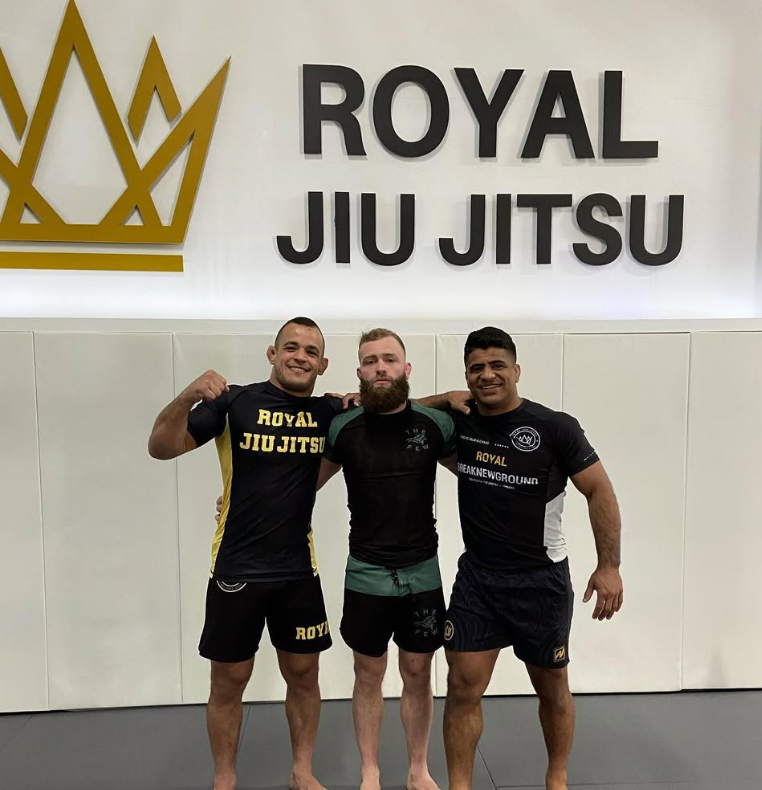
The fastest way to feel like you belong in a big borough is to train with people who challenge you, then cheer for you anyway.
Adult brazilian jiu jitsu is often described as a martial art, but in Queens it quickly becomes something else: a weekly meeting place where people who would never cross paths on the street end up learning each other’s rhythms, boundaries, and strengths. We see it every day on the mats. You show up for fitness, self-defense, or a new challenge, and you stay because your training partners start feeling like real friends.
Queens can be busy and anonymous, even when you love it here. Our adult program gives you a reason to come back to the same room, at the same times, with the same crew, week after week. That repetition matters. Friendship is rarely instant, but it becomes inevitable when you solve hard problems together, safely, over time.
Below, we’ll break down exactly how brazilian jiu jitsu in Queens supports adult connection, why the structure of training makes friendships stick, and how you can step into the community in a way that feels comfortable even if you’re not naturally outgoing.
Why adult brazilian jiu jitsu creates friendships faster than most hobbies
Most adult hobbies are either solo (gym workouts, running) or social but surface-level (networking events, casual leagues that rotate teams). Adult brazilian jiu jitsu is different because the training itself requires trust, communication, and consistency. You cannot “fake” your way through a round. You have to cooperate to learn, and you have to respect each other to train safely.
That’s the first friendship ingredient: shared effort. In class, we drill details that look small from the outside but feel huge when you’re the one trying to make them work. When you finally hit a clean sweep or escape you’ve been chasing for weeks, the people around you understand what that took. That kind of recognition is surprisingly meaningful.
The second ingredient is shared vulnerability. BJJ is humbling. Every adult begins as a beginner, and everyone taps. When you practice in a room where tapping is normal and respected, you learn to be honest about where you’re at, and you learn to support other people without ego. It’s hard to stay strangers for long in that environment.
The “training partner effect”: how repeated rounds turn into real connection
In Queens, schedules are packed. The adults who get results usually do it through consistency, not intensity. Training two to three times per week is a sweet spot for many beginners because you improve steadily without burning out, and you see familiar faces often enough for bonds to form naturally.
In adult brazilian jiu jitsu, you also work with many different partners. Over time, you start remembering details about each other, not just names. Who is coming back from a sore shoulder. Who likes to move fast. Who’s nervous before sparring but always shows up anyway. That attention creates a quiet kind of respect, and respect is the foundation of lasting friendship.
We also build structure into class so you’re not left standing alone wondering what to do. Partner rotations, guided drilling, and coached rounds all make it easier to connect without forcing awkward small talk. And then, once you’ve trained together a few times, conversation starts happening on its own.
Trust, safety, and boundaries: the social skills you practice without realizing it
If you’ve ever tried to make new friends as an adult, you know the weird truth: everyone wants connection, but few people want to be the first one to reach out. BJJ gives you a socially “safe” reason to interact, and it teaches you how to do it with clear boundaries.
Every round includes small acts of communication:
- Checking in about pace and intensity
- Adjusting for size or experience differences
- Resetting after a scramble
- Respecting a tap immediately, every time
Those habits spill into the rest of your life. You get better at speaking up calmly. You get better at listening. You get better at being a reliable person in a room, which is basically what friendship is made of.
Safety matters here, too. A 2019 study often cited in the community reported 59.2 percent of practitioners had an injury in the prior six months, and newer students tend to be at higher risk during general training. That’s why our adult program emphasizes fundamentals, controlled intensity, and progressive training. When people feel safe, they relax. When people relax, they connect.
A long-term hobby for adults who want friendships that actually last
One reason friendships fade in adulthood is that many activities are short-term. People try something for a month, disappear, and the connection never has time to deepen. Brazilian Jiu-Jitsu is built for long timelines. Progression takes years, and that’s part of the point.
Across IBJJF ranks, average time-in-belt is often described like this: about 2.3 years at white belt, 3.3 years at blue, 3.4 years at purple, and longer at higher levels. In other words, adult brazilian jiu jitsu rewards commitment. And when you commit alongside the same group of people, you start to share milestones: first stripe, first successful guard pass, first time you feel calm in a hard round.
Those shared milestones become memories, and memories become real friendships.
The Queens advantage: diversity on the mats, common ground in the work
Queens is one of the most diverse places in the country, and you feel that in adult classes. People come in with different jobs, different backgrounds, different fitness histories, and different reasons for training. But once the round starts, none of that matters as much as showing up, learning, and treating people well.
That’s why brazilian jiu jitsu in Queens can be such a powerful social anchor. You don’t need the same interests outside the gym to build connection inside it. The common ground is the work itself: drilling, sweating, laughing at the same mistakes, and getting a little better together.
And the friendships aren’t limited to the mat. Once you have a few consistent training partners, it’s normal to see accountability buddies form. You start messaging each other about which class you’re hitting. You start checking in when someone misses a week. That kind of gentle responsibility is rare in adult life, and it’s also what helps friendships stick.
What the first month feels like (and how friendships start early)
Most adults feel a bit awkward at first, and that’s normal. You’re learning unfamiliar movements, new vocabulary, and the strange art of being relaxed while someone is trying to control you. The good news is that adult brazilian jiu jitsu is designed for beginners to look like beginners for a while, and nobody is judging you for that.
In the first month, friendships usually start in small, practical ways:
- Someone shows you how to tie your belt without making you feel clueless
- A partner reminds you to breathe during positional rounds
- You laugh together when a technique goes sideways
- You notice the same people training on the same days
We keep the early experience structured so you can focus on learning instead of worrying about where you fit in. The social part tends to arrive quietly, then all at once you realize you know people’s names, you’re comfortable asking questions, and you look forward to the room.
How we design adult classes to build community, not just technique
Friendships don’t happen by accident. Culture is built through repeated choices: how we pair partners, how we talk about safety, how we coach intensity, and how we welcome new students.
Here are a few ways our adult program supports connection while still staying serious about skill-building:
• Fundamentals-first curriculum that gives beginners a shared language, so you can train with many partners and still feel oriented
• Guided partner work that rotates you through different body types and styles, which helps you meet more people naturally
• Clear expectations around tapping, control, and respect so the room stays safe and friendly even during hard rounds
• Open mat opportunities and extra drilling time so relationships can deepen beyond the structured portion of class
• Coaching that encourages questions and curiosity, which makes it easier to talk to teammates without feeling awkward
This is also where membership consistency matters. In Queens, monthly training costs often land around 180 to 230 dollars depending on options and access, and unlimited training tends to support faster progress and deeper community because you simply see people more often. Whatever schedule you choose, we’ll help you match it to your goals and recovery so you can stay steady.
Training frequency: how often to come for results and friendships
If your main goal is progress plus connection, we usually recommend a realistic baseline that fits adult life. Two to three sessions per week is enough to learn fundamentals, improve conditioning, and build relationships without turning training into another stressful obligation.
A simple approach that works for many adults looks like this:
1. Commit to two weekday classes you can protect on your calendar
2. Add one optional session or open mat when your energy and schedule allow
3. Prioritize recovery so you can show up consistently, not just intensely
4. Track small wins weekly, like remembering a sequence or surviving a bad spot calmly
5. Stay patient and keep showing up even when progress feels slow
That patience is where friendships form. People trust the adults who keep coming back, encourage others, and train with control.
Shared challenges: how hard rounds turn into real-life support
There’s a specific kind of bond that forms when you’re doing something difficult on purpose. In adult brazilian jiu jitsu, hard rounds are hard in a clean way. You struggle, you problem-solve, you reset, you try again. Nobody needs to create drama. The challenge is already there.
That shared challenge often turns into practical support outside the gym. Training partners become the people you ask about stretching a sore hip, managing stress, or staying consistent when work gets heavy. Even if you never talk about your personal life much, you still get the benefit of being around adults who are working on themselves. That atmosphere rubs off.
What to bring to your first class (so you can relax and connect)
You don’t need much to start, and simple is better. Bring comfortable athletic wear, a water bottle, and an open mind about partnering with different people. We’ll handle the rest, including guidance on uniforms and what to expect on the mats.
The real “thing” to bring is willingness to be new at something. That is what makes the room friendly. When you show up ready to learn, people meet you there.
Take the Next Step
If you want a fitness routine that also gives you a real circle of Queens friends, adult brazilian jiu jitsu is one of the most reliable paths we know. The skills are practical, the workouts are honest, and the friendships form in a way that feels natural because you earn them together.
When you’re ready to experience that environment in person, we’ll guide you from your first fundamentals class through the long game of improvement and community at Royal Jiu-Jitsu Queens, with a class schedule that makes consistency possible in real adult life.
If you’ve been curious about training but aren’t sure where to start, a free trial class at Royal Jiu Jitsu Queens is the perfect first step.