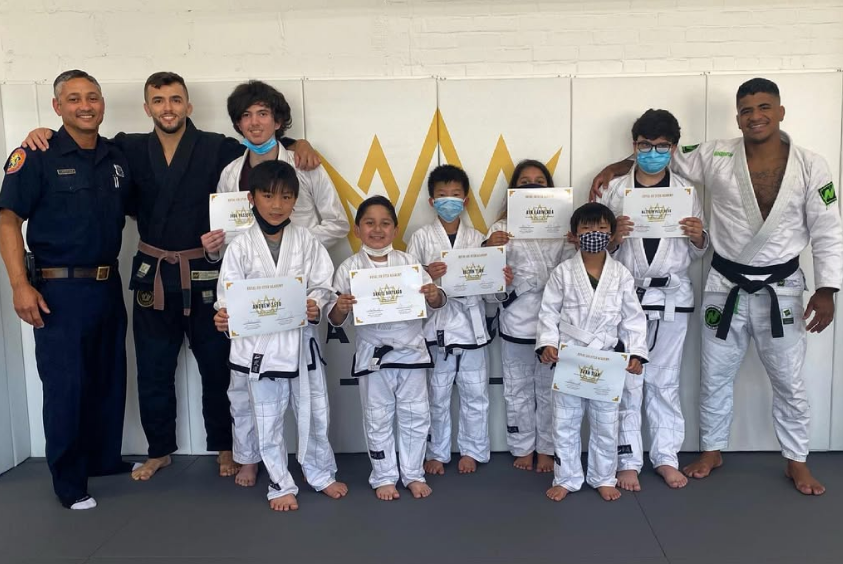
The right kind of training can help your child slow down, pay attention, and respond with confidence instead of reacting.
Queens families are busy, and most kids feel that pace in their bodies and emotions long before they can explain it. We see it every week: students walk in carrying school-day stress, sibling energy, social pressure, and the general rush of the borough. Youth Brazilian Jiu Jitsu gives that energy a place to go and, more importantly, a way to settle.
What surprises many parents is that grappling is not just physical. Our mats become a practical classroom for focus, patience, and self-control. Yes, your child learns real technique, but Youth Brazilian Jiu Jitsu also supports mindful growth in ways that show up at home, at school, and in how your child handles everyday frustration.
Queens is also a perfect fit for this kind of program. Local demand is strong across neighborhoods like Kew Gardens, Jackson Heights, Bayside, Flushing, Ridgewood, and Astoria, and families often want something structured that still feels welcoming. When kids have a consistent routine and clear expectations, the improvement can feel almost obvious, even if it takes time.
What we mean by mindful growth on the mat
Mindful growth is not sitting still and being quiet all day. For kids, it usually looks like learning to notice what is happening inside their body, then choosing the next action on purpose. Youth Brazilian Jiu Jitsu is built for that because every position asks your child to do three things at once: pay attention, stay safe, and solve a problem.
In our Brazilian Jiu Jitsu Classes for Youth, we coach students to slow down their decision-making. Instead of rushing, we teach them to build a base, find balance, and use technique. Over time, that habit can carry into the rest of life, especially in a fast-moving place like Queens.
1. Grappling teaches calm decision-making under real pressure
Most kids have only two speeds when they feel challenged: freeze or explode. On the mat, we introduce pressure in a controlled, coached way. Your child feels what it is like to have someone close, resisting, and trying to improve position. That sounds intense, but it is exactly why the lesson sticks.
Youth Brazilian Jiu Jitsu creates a safe space to practice staying calm. We show students how to breathe, how to frame, how to recover guard, and how to re-center when something is not going their way. That process turns stress into information instead of panic. The goal is not aggression. The goal is composure.
For parents, one of the best signs is when a child starts narrating choices. You may hear, “I tried to push too hard,” or “I should have moved my hips first.” That is mindful awareness, and it grows from consistent, supervised reps.
2. “Losing” becomes feedback, not a personal failure
Kids often tie self-worth to immediate results. If something is hard, the conclusion becomes: “I am not good at this.” On the mat, we reframe that. Positions don’t care about confidence, and that is actually helpful. Technique either works or it does not, and if it does not, we adjust.
BJJ is also expanding fast and staying organized. Youth competition data is massive, with one current rankings platform listing 162,724 fighters, 832,595 matches, 2,774 tournaments, and 11,353 academies. We share that not to push competition, but to show that the sport supports long-term progression and measurable improvement. Another analytics site reports annual growth of 8.5%, which tells parents this is not a passing trend. It is a structured activity with a real pathway.
In practice, your child learns to separate identity from outcome. Tapping is normal. Getting swept is normal. Forgetting a step is normal. What matters is learning what happened and trying again with a better plan. That is resilience you can watch develop week to week.
3. The body becomes a “focus tool” through balance and tempo
Mindfulness is often taught as a mental skill, but kids learn it best through movement. In Brazilian Jiu Jitsu in Queens, we use balance drills, positional sparring, and timing-based games that force students to be present. If their mind is somewhere else, they lose posture. If they rush, they give up space. If they hold their breath, they get tired fast.
We coach a simple sequence: posture, base, and then movement. That order matters. A child who learns to settle their stance and breathe before acting is practicing a real-life skill: pausing before reacting.
This is also why Youth Brazilian Jiu Jitsu works for many body types and personalities. A smaller student can thrive with angles and timing. A shy student can gain confidence through repetition, not spotlight. A high-energy student can learn control without being told to “calm down” in the abstract. The mat does that teaching in a way kids can feel.
4. Respect becomes a habit, not a lecture
In Queens, kids meet a lot of different personalities, cultures, and social styles. Our training environment is built on clear rules that keep everyone safe and learning. Bowing in, listening to coaching, and taking turns with partners is not just tradition. It is practical respect.
Because grappling involves close contact, students learn boundaries quickly. We teach them how to ask to train, how to be a safe partner, and how to stop immediately when an instructor calls time. Respect is reinforced through structure, not speeches.
Here are a few mindfulness-friendly habits we build into class without making it feel heavy:
• Checking in with posture and breathing before starting a drill, so kids begin with awareness
• Using “pause and reset” moments after a scramble, so students learn to recover calmly
• Rotating partners thoughtfully, so students practice adaptability and social confidence
• Practicing controlled intensity, so kids learn that effort and aggression are not the same
• Ending with a brief review, so students name what improved and what they will work on next
Those habits look simple, but they add up. Over time, kids start bringing that respectful pacing into everyday interactions, especially when emotions run hot.
5. Age-specific coaching makes growth feel safe and achievable
Parents often ask, “What age can my child start?” In Queens, many programs are segmented, sometimes with tracks like ages 4 to 6 and youth programs for older kids. That matches what we see: children learn best when instruction fits their stage, attention span, and coordination.
We structure our Brazilian Jiu Jitsu Classes for Youth so beginners are not thrown into a one-size-fits-all experience. Younger students need shorter explanations and more guided games. Older youth can handle longer technique chains, more positional detail, and more structured sparring. When class design matches the child, confidence grows faster, and anxiety drops.
For shy or nervous kids, this matters a lot. If your child feels overwhelmed by loud group settings, a well-run class with consistent routines can be a relief. The predictability becomes calming: warm-up, technique, partner practice, then supervised sparring or situational rounds. That rhythm is a quiet form of mindfulness.
How a typical youth class supports focus and self-control
Parents also want to know what actually happens in the room. While each day has its own theme, we keep a steady structure so kids know what to expect, and that consistency is part of the mindful growth.
A common class flow looks like this:
1. Warm-up that builds coordination, balance, and safe movement like shrimping and rolls
2. Technique section where we teach one core idea and a few variations, not a long list
3. Partner drilling with coaching, so students learn to correct mistakes without frustration
4. Positional sparring that limits chaos and builds decision-making one step at a time
5. Cooldown and quick recap, so your child leaves knowing what improved
This format also helps kids who struggle with transitions. Instead of sudden changes, the class moves in stages, which supports emotional regulation. You will often notice that students leave class more centered than when they arrived, which is not a small thing after a Queens school day.
Common parent questions about Youth Brazilian Jiu Jitsu in Queens
What age can my child start BJJ?
Many children can start young when the class is designed for their age and attention span. We recommend checking the program details and asking us about the best fit based on your child’s age and maturity.
Is BJJ safe for kids?
Safety is built into how we coach. We emphasize tapping, controlled pace, and supervision. Kids learn how to train with care before intensity increases, and we match partners thoughtfully.
Does my child need to be athletic already?
No. Youth Brazilian Jiu Jitsu is skill-based. Coordination and conditioning improve through training. Many students start with zero sports background and do great because progress is step-by-step.
Will this help with confidence or bullying situations?
We focus on calm confidence, posture, and decision-making. Kids who learn boundaries and control often carry themselves differently, and that can change social dynamics quickly.
How often should kids train each week?
Consistency matters more than intensity. Many families start with a couple days per week and adjust as routines settle. We can help you choose a schedule that is realistic for school and commuting.
Is competition required?
No. Some kids enjoy competition goals, but many train purely for growth, fitness, and confidence. The best path is the one your child will stick with.
What should my child wear to the first class?
Comfortable athletic clothes and a water bottle are usually enough for a first visit. We will guide you on uniforms and gear once you decide to continue.
Why Queens families value neighborhood-based training and routine
Queens is big, and families plan around traffic, trains, school pickup, and after-school commitments. That is why consistent class times and a reliable training community matter. When your child trains in a place that feels familiar, progress accelerates. They stop spending mental energy on “what will happen” and start investing it in learning.
Youth Brazilian Jiu Jitsu also gives kids a third space beyond home and school, where effort is respected and improvement is visible. That can be especially meaningful in neighborhoods where kids are juggling a lot. Showing up, working hard, and earning small wins on the mat becomes a stabilizing routine.
Take the Next Step
If you want an activity that builds fitness and real-life emotional skills at the same time, Youth Brazilian Jiu Jitsu is one of the most practical options we teach. The mindful growth is not abstract, it is trained: breathing under pressure, listening while moving, and choosing technique instead of impulse.
When you join us at Royal Jiu-Jitsu Queens, you get a youth program designed for steady progress and a community that values respect, safety, and confidence that feels earned. If you are ready, we would love to help your child take that first step and keep building from there.
Experience how Brazilian Jiu-Jitsu builds confidence, resilience, and discipline at Royal Jiu-Jitsu Queens.